
66,000 people applied for a Colorado moose hunting license this year. Only a few won.
share
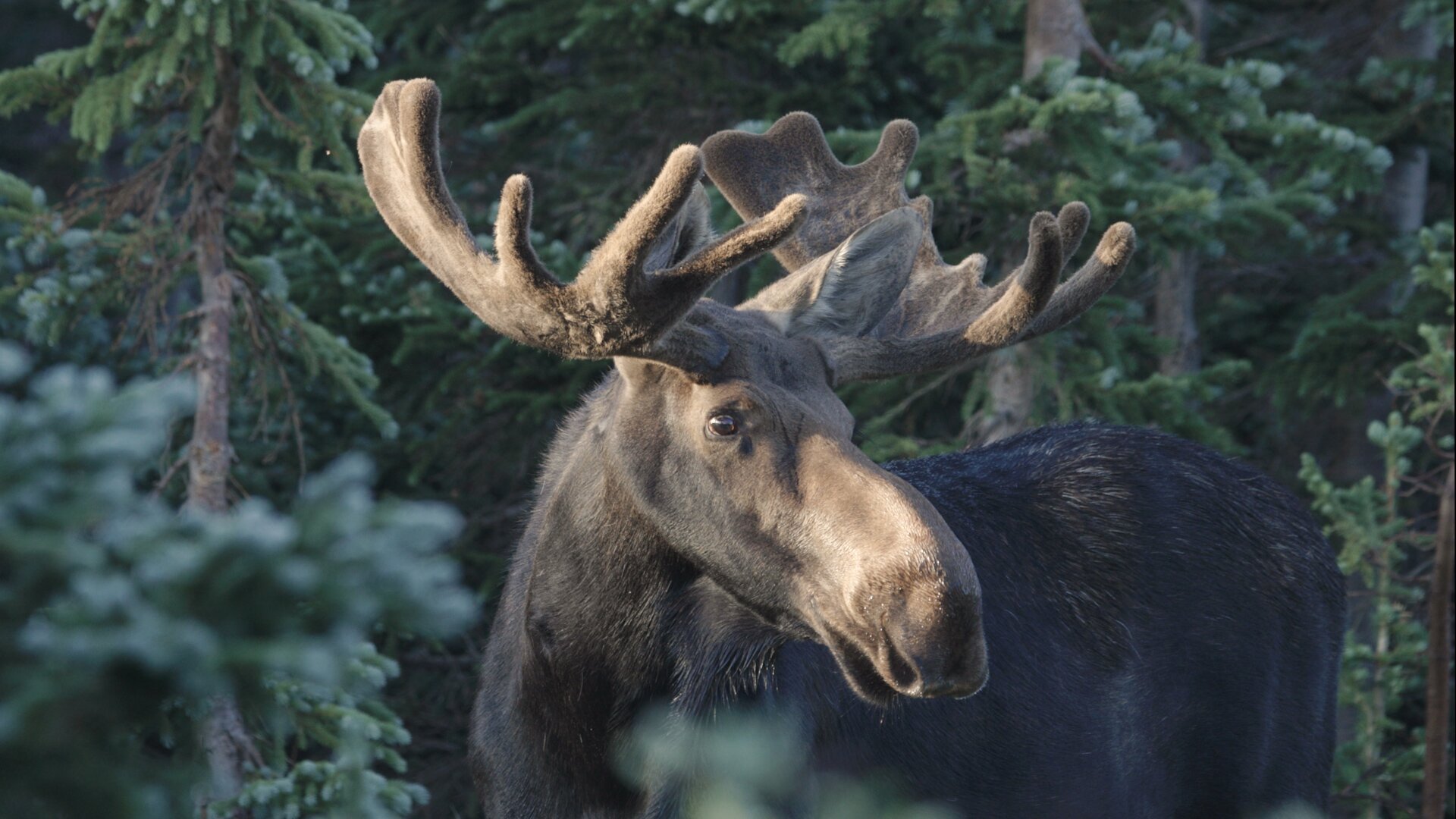
This article is part of production for a documentary examining the challenges with moose management throughout the state including Rocky Mountain National Park. The RMPBS Original Documentary, “Managing Moose: Colorado’s Most Dangerous Animal” premieres Thursday, Sept. 17 at 7:00 p.m. on Rocky Mountain PBS.
DENVER — Drawing a moose license in Colorado can feel like winning the lottery.
This year, 66,000 hunters applied for a moose license but only 761 will get the chance to hunt for one.
“I started the first year they were offered [in the 90s]. I've never drawn, a lot of my friends and relatives have never drawn. It's very tough to get,” said Scott Limmer, manager of a northern Colorado outfitting business.
Muzzleloader and archery moose hunting begins Sept. 12 in the state and rifle hunters can go out starting Oct. 1. Hunters found out if they won a license at the end of May.
Of the 761 licenses issued by Colorado Parks and Wildlife for the 2026 season, 438 licenses were for cows (females) and 323 for bulls (males).
“The bull license is our hardest to draw for a big game license in Colorado,” said Andy Holland, big game manager for CPW. “And it's essentially the Powerball of big game hunting.”
CPW uses hunting licenses to control populations of many big game animals, including moose, which have seen a dramatic increase in population in recent years. Holland said that much of Colorado and the Rocky Mountains are “excellent moose habitat” and moose have expanded into new areas of the state.
Currently, CPW estimates there are about 3,400 moose living in the state — a number Holland said is finally leveling out.
“The only thing that's keeping them from overpopulating is our female harvest,” said Holland.
To keep up with a burgeoning moose population, CPW has increased the number of cow moose licenses fourfold over the past 13 years and increased the number of Game Management Units that allow moose hunting from 39 to 74 in that same time period, Holland said.
“Without hunting in Colorado, the animals could have become overpopulated over time for the amount of habitat we have left,” said Limmer.
Most of a moose’s diet in Colorado is willow. In the summer, an adult moose can eat up to 60 pounds of the plant a day. Willows are a crucial plant to the state’s wetlands, and their degradation can have a domino effect for countless other plants and animals.
“What we're trying to prevent is moose populations from peaking and over-browsing sensitive willow and aspen communities and then crashing,” said Holland.
Now that the moose population is stabilizing, CPW doesn't expect the number of licenses to increase significantly.
CPW gathers valuable information about moose populations from staff field biologists and from the hunters themselves. The agency requires hunters to submit a report and the head of the animal they killed for inspection and age testing once the hunt is over.
“Moving forward, we'll continue to harvest moose to keep them from getting over abundant and damaging willow and aspen,” said Holland.
Colorado did not have official moose population numbers before the state began relocating moose from other states in 1978. From then to 2010, wildlife officers transferred 215 moose to establish a breeding population for wildlife viewing and hunting opportunities.
“And it was hunters’ dollars that funded all those transplants,” said Holland.
In fiscal year 2024-25, hunting and fishing licenses, park passes, fees and permits made up 58% of CPW's $378 million in revenue. Moose hunting licenses cost $385.66 for Colorado residents plus an additional $70 in other fees. Out-of-state hunters, however, pay $2,823.53 for the same license plus those $70 in other fees.
In his 36th season as a hunting guide, Limmer has 10 moose hunters signed up for guiding services through Comanche Wilderness Outfitters, the company he runs. He and his team provide horses, camping gear, food and guiding for weeklong moose hunts. Limmer also helps hunters decide which animals to pursue.
“We like to enjoy the whole trip, find a mature animal that's already done its biological job, it has passed its genes on through breeding seasons,” he said.
In more than three decades of guiding moose hunters, Limmer said every seven-day hunt has ended with bagging a moose. But first, hunters have to draw one of the state's limited licenses through the lottery system.
“People go their whole lives literally without ever drawing,” said Holland.
Type of story: News
Based on facts, either observed and verified firsthand by the reporter, or reported and verified from knowledgeable sources. To read more about why you can trust the journalism of Rocky Mountain PBS, please visit our editorial standards and practices page.
Based on facts, either observed and verified firsthand by the reporter, or reported and verified from knowledgeable sources. To read more about why you can trust the journalism of Rocky Mountain PBS, please visit our editorial standards and practices page.