
How Colorado Olympians spent their summers after winning medals in Italy
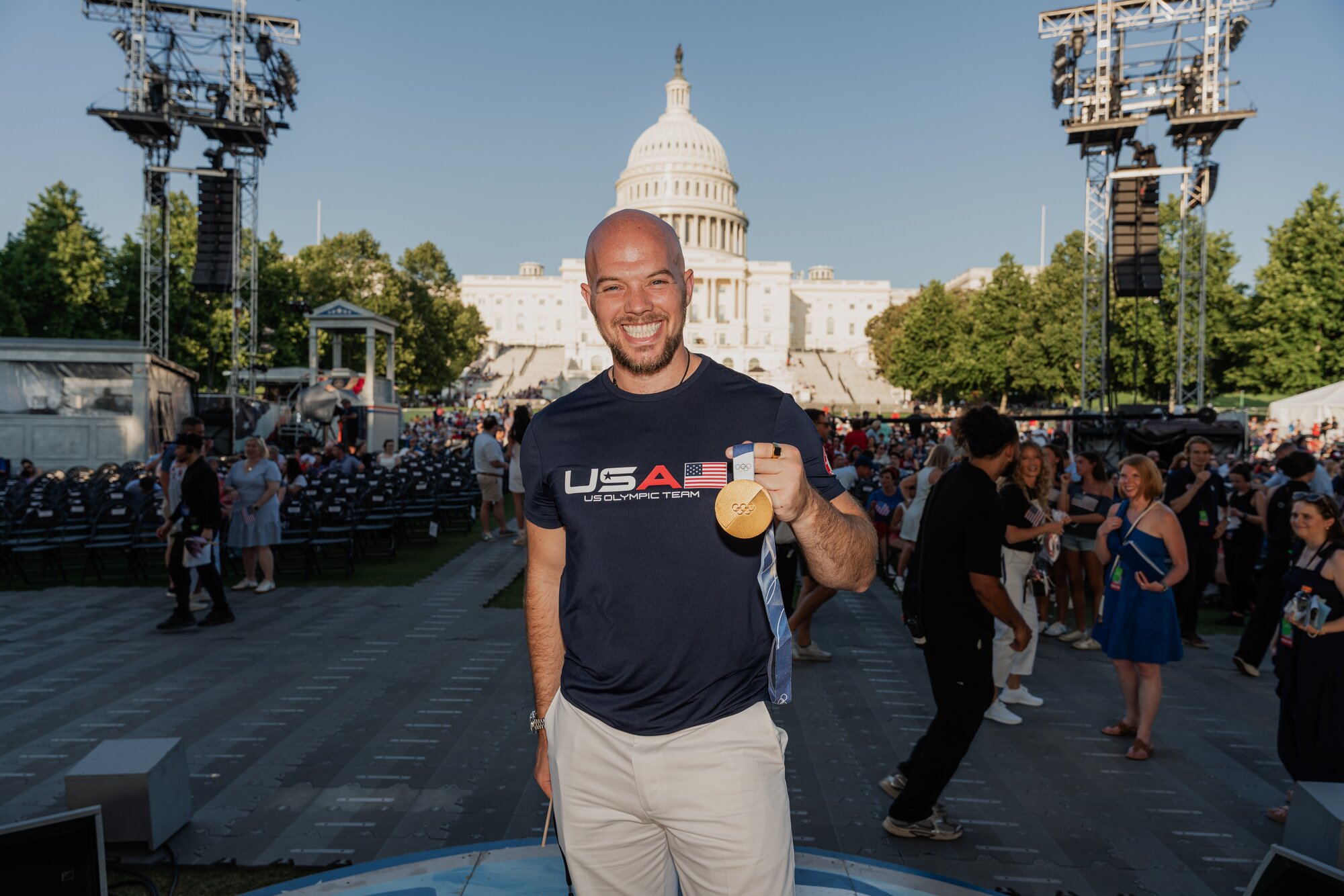
Rocky Mountain PBS: Tell me about your experience winning a medal at the Winter Olympics. Do any specific moments come to mind first?
Elizabeth Lemley: Leading up to the Games, I trained in France and I had a pretty spectacular training camp there. That was sort of the last step, and I felt really good. So I came in super focused.
A year before I had torn my ACL, but I knew I wanted to come back and win a gold. So I did so much planning with people and set this goal and followed all of the steps that I had set out. And this was, like, the buildup moment. I did have fun, of course, because that's part of it. And then I ended up winning. So it was just great to see that it all came together exactly how we planned.
It was kind of a different experience to winning than I had before, because Jakara Anthony blew out. It's usually really, really suspenseful. But at that time it was just like, “Oh my God, what just happened?” I didn't really have too many overwhelming emotions. I guess I was mostly concerned with what I was going to do when I stood on the podium.
I just have a little thing that I like to do at the end of my runs. I saw it in a Calvin and Hobbes book once. Calvin did this claim [shaking clasped hands on each side of his head] after he landed his spaceship. And so I copied that.
I couldn't sleep the night I won. Like, clearly it was crazy, and I was super giddy. Just really excited about the fact that I had achieved this thing. And then I ended up winning another medal. After that, it was just amazing. And then I got sick and then I got the flu. I really had a sucky Olympics after that. I felt like I couldn't think for three days because I was so sick.
Jaelin Kauf: I don't even know how to describe it. When the score comes up and it sets in and you realize that you have an Olympic medal … But I was really focused on just trying to have fun and just ski my runs the best I could.
As soon as I, about every run, landed the bottom air, I was just smiling, just beaming, skiing the bottom section and skiing across the finish line, because that is what I went there to do. I went there to put down my runs and to try and put on a good show for family and friends and everyone there watching. And so regardless of the score that really came up at the end, I feel like when I crossed that final run, I already won in my head.
After a dual moguls event, which was our last event, we could actually kind of celebrate and go hang out and let loose with family and friends. And we all just went out to this place in town … It was mid-afternoon and [we] just had this huge dance party outside on the deck, and everyone was just passing the medals around, and we were all just singing and dancing and just having a blast.
Jake Canter: I didn't really know what to expect going into it, and kind of the build-up for it.
Big air didn't go the way that I wanted it to, and that was frustrating. But it also lit a pretty good fire underneath me to really put my head down. And I spent that week really hard in the gym and focusing on myself and staying as focused as I could for my next event, which was slopestyle.
I didn't want to treat it like this pinnacle that it is and put it on this pedestal. And so my biggest thing was just trying to treat it like any other World Cup contest or X-Games, and just enjoy it for what it was. I really do love competing, and I just wanted to have as much fun as I could out there.
But looking down at the course and seeing the fans and the cameras and everything else that is the Olympics, it's just so different. And that was kind of when the stress really hit. But at the same time, I really enjoyed being in those pressured moments.
Honestly, holding the medal for the first time — I think that was the craziest thing. Having it in my hands and going like, “Whoa, this is mine.” That was probably one of the bigger [moments]. The other one would be standing on the podium and accepting my medal, looking out at all those people, my family and my friends, coach, agent, everybody and all the cameras and everything. That was a moment that I don't think I'll ever forget.
Danny O’Shea: It was beautiful.
Ellie and I were very stressed at our Olympic qualifier, our U.S. championships. We did not skate to our fullest potential there. We still were able to qualify for the team. We're very, very grateful we did enough and we got the job done. Our number one goal at the Olympics was, “How can we make this as much fun as we can have and then help others experience that joy too?”
For the Olympics, we knew that the individual gold medal wasn't going to be a very easy thing for us to achieve, but we also knew that we had something very special in the team event, and we had a really amazing opportunity to make a difference there.
So when we came to the final day, we skated literally our best performance of our life, about as good as we could possibly have hoped to do, and got only one point higher than we expected to get. But then Team USA ended up winning by just one point. So it was a moment where we felt very accomplished but also so grateful that we had just gone for everything. We didn't hold back at all.
It's an amazing feeling to work at something for your entire life. I'm 35 years old now. I have worked at this since I was four years old … and to step up in that moment and have our personal best score, personal best skate in the moment when it matters most, it's just everything you could ask for and what you dream about since you're a little kid.
We got up on the podium, and they put a gold medal around your neck and it's so satisfyingly heavy. I tell everyone that it's the weight of all the meaning inside there.
RMPBS: Now that you’ve some distance from the Olympics, how do you reflect on your experience? What’s the post-Olympic experience feel like?
EL: There's definitely a difference between your fantasy of winning a gold medal and the reality of what actually happens. It's amazing and it changes your life in some ways, but not in the way you think. Being in the U.S., everybody doesn't come flooding for you like a huge celebrity. Which I thought was funny and definitely not what you expect.
All the attention comes off of you a few weeks after the Olympics because people's attention spans are already on something else. And it's weird to you because you feel on top of the world and still super excited about it, but everybody else isn't. And then that also would contribute to blues. But I didn't have too many because I got excited about, “What's next?”
I realized that not only am I a role model now and have to speak at things, [but] I have a platform now where I can make great changes. I got to thinking about just what I wanted to achieve next in mogul skiing, and it kind of leans more away from the results. Yes, I am going to go and get better and hopefully win more medals … but the gold medal definitely helps [my] ability to change my sport, [and] help winter sports in general. So I have many plans on how to do that. I'm really passionate about being able to help young kids access skiing and winter sports easier.
And then on top of that, I'm also starting school in the fall. So, oh my gosh, I have many new things on my plate.
JK: It was all so amazing. I was able to ski and perform well and got good results. At the Olympics, which also helps with it. But especially after the ‘22 Olympics still in the pandemic on Covid lockdown, no friends and family over at the event, this time was just so special.
It was the first Olympic medal that my parents got to watch me win and receive and get awarded in person, which makes me tear up just talking about it right now. They really instilled that love for the sport and competing and skiing in me, and so to be able to take it to the highest level and accomplish such crazy dreams with them both standing there at the bottom … is just incredible.
I've always tried to have a really good balance between my skiing life and my life outside of skiing. And so after this Olympic year, especially with how much more time I put into training and everything during the prep season and being gone so much over the winter, I was so excited to get back to my life outside of skiing and time with family and friends. Which for me, I think really helped with staying in a really good headspace and not feeling that way [post-Olympic blues] in the months following.
JC: I feel like it has changed a lot. Obviously there's the media and everything else that comes with it, but for me … the Olympic come down is pretty difficult.
I've been chasing this for [the] last ten years. It brought a lot of emotions and things that I've tucked far, far, far down to be able to accomplish this goal. And so that was definitely pretty difficult of being like, “All right, what now?”... and feeling a little bit lost in space. But I'm very fortunate to have a therapist and sports psychologist and a lot of good people.
It definitely opened my eyes a lot more to kind of my inner self in a way, which is crazy. The first month was phenomenal — amazing opportunities and [I] got to really capitalize on the experience. And then obviously, you know, the limelight isn’t going to be there your whole life. How am I going to fill this void?
There's no better feeling to be in flow state and truly be so present in the moment. But I think for me, I pushed a lot of things that I needed to work on within myself through [the] qualifying period. I think especially this last year, it's [been] like, “I want to win this contest to qualify for the Olympics and make the Olympic team.” But now I'm just going to compete for myself. So just kind of changing my mindset.
DO: One of the things that you hear a lot about is a post-Olympic depression that people go through, and it was something that I actually tried to prepare myself for … but I think I've been truly blessed.
We kind of haven't stopped moving, number one. So that's not giving me time to have too much down[time], sitting around. We came home and we started training for world championships.
But as of right now, it feels again like a very light ambition. There's so much to do and so much to accomplish and so many amazing opportunities in front of us — it's very nice to not feel the intensity of time pressure to go accomplish them now but still feel the drive to improve and to grow.
RMPBS: How are you spending your summer? Relaxing? Back on the grind? And what does offseason training look like for you?
EL: This summer I prioritized just doing whatever I wanted, because you never really get that opportunity. And so I did. I took a vacation. I went to a ski camp. I went to Indonesia and then on the way back I stopped in Korea for a few days just on a whim. I've been working out a bit, but mostly I've been spending time with my friends. It's been a great decompression from all of the stress of last season. At the end of the summer, school’s starting. So I've been thinking a lot more about what my next year is going to look like. At the end of the summer, school’s starting. So I've been thinking a lot more about what my next year is going to look like.
And then at home, I guess I've just been bouncing between Park City and Vail, just kind of hitting my bare minimum of gym training there and just connecting with my friends in both of those places is super fun.
JK: I [took] a couple months off at the start of the summer to not train, which I've never really done before.
In the summer, we spend a ton of time on the water ramps … we'll get a thousand jumps on the water ramps in a summer. So we'll combine that with trampoline.
Going into the Olympics, for the summer and fall prep, I committed to doing every training camp, doing all of the things and going all in because you don't want to feel like there's something more you could have done.
And so part of what got me through doing all of that was, “Okay, but next summer's for me.”
And so this year was really important for me to take a couple months to not have my summer scheduled out and be able to do anything that I wanted to do, like trips with family and friends and camping.
We're doing a surf trip in the fall just before the season. I [took] a trip back to Steamboat this summer with some of my high school friends. Summer has always been so, so booked and scheduled for me. So that freedom is really nice.
JC: Not the most ideal after-Olympic summer, but so far I've had two pretty big surgeries. I had my labrum repaired in April, and then in May I had my left hand thumb repaired. The first bit of summer I spent in the sling and then the second bit in a cast.
[I’m] spending a lot of time with my mind, which is good, I think I needed it. Everything happens for a reason.
I went on vacation probably for the first time in like four years. I went to the Amalfi Coast. It was nice to have some time in the ocean, trying to conquer that fear after growing up landlocked.
[I’m] doing lots and lots of gym time. I look crazy in the gym. People look at me pretty funny, but you know, it works. Conditioning, core, lower body balance, not too crazy with weight lifting, but definitely working.
Skateboarding is a huge part of my offseason. I love skateboarding. It was kind of my first love. I wanted to be a pro skater before I was a pro snowboarder. Being able to take that snowboard mindset into skateboarding is really big.
DO: I was asked to go and do a little bit of behind-the-scenes social media interviewer role from the ISU, the International Skating Union. So I got to go [to the World Figure Skating Championships].
We went off to the Stars on Ice tour, where we did 29 cities across the country over eight weeks and performed in front of sold-out NHL stadiums in almost every city we went to. It was truly like a rockstar lifestyle for two months, which was wild and very unlike anything I've done before.
I was able to go visit my girlfriend's family down in Texas. Then I was able to say yes to just a dinner with friends. Normally I would have just said, “No, I have to train in the morning. I'm sorry. I won't get home until midnight and it'll be too late.” I [flew] to Las Vegas for Flavor Flav SHE Weekend … celebrating all of the female Winter Olympic medalists from this past year.
I’m still getting into the gym three days a week, and I am at the rink every day coaching Monday through Friday. Ellie and I have been training for just about an hour every day. Nothing crazy compared to what we usually do.
I'm 6 feet tall. So then you add another 3 feet from my arm and she's easily 9 feet in the air when I'm carrying her, and 11 feet, 12 feet when I throw her up there. In order for us to do that with some modicum of safety, we have to really hone in a lot of very small muscle groups in the gym. So when you watch us in the gym, there's the occasional thing that you would recognize, but most of it is just like really funny-looking, sport-specific gym routines. I hold the kettlebell by the handle and put the weighted part facing up with a 28-kilogram kettlebell and walk the length of the turf doing funny spins.
I try really hard to keep my cardio up, because if I don't, then I end up hating myself for having to restart that base of cardio. But we live in beautiful Colorado, so I get outside and do my cardio outside in the mountains as much as I can. We have a cool hike here called the Manitou Incline. So I try to get over [there] and do that once a week and make some friends along the way.
RMPBS: And what’s coming up next for you?
EL: Well, I'm actually taking the next season off of competition. I decided that I want to prioritize both training without the pressure of competition and school. So I am going to go to college full time and take some weeks here and there to go and have some ski camps where I'm just figuring out my skiing and bringing new tricks to snow.
My goal next year is just to really fall in love with skiing and fall in love with the technical aspect of it more — I already love that, but more — and kind of come back the year after on a whole other level than anybody has ever seen in women's mogul skiing.
JK: In the fall, I'll get back to training and we'll go to training camp in Chile. And then kind of the season starts from there.
We just launched [Deliver the Love] at the beginning of this year. We're all about supporting girls and women in sport and really trying to do that by inspiring confidence and self-love. We're doing our first in-person event this summer up in Teton Valley, Idaho, and it's going to be a field day for girls 8 and older. Really the main idea is just to get girls in sports and keep girls in sports, and help them find their own love, their own passion.
It's been a work in progress for a long time, and so it's been really fun to actually get it off the ground.
JC: This morning, I was already on calls trying to figure out what my fall looks like and trying to figure out when I can get back on my snowboard. Definitely kind of ready now. It's only been a few months, but I'm getting pretty bored. So [I’m] looking forward to getting back on snow in the fall and just trying to travel and keep myself busy and trying to better myself every day.
DO: We're staying in shape and skating together and making sure we can [return to competition] if we so choose. There's not a great hurry or a great rush to make that decision from us. I feel very much like I am enough either way. And life is flowing very smoothly and nicely out of that.
[It] was nice to say yes to a lot of experiences [this summer] I might not have been able to in another time in my life when I had to focus on training more because we decided to take at least the first half of the season off.
I've been coaching a bit more, and Ellie and I are getting ready, too. We're about to travel to Japan to do a show called Destiny on Ice, and we're doing some seminars and going to be coaching and teaching, and then we'll see if we end up skating the rest of the season.
Now to have the opportunity to really just breathe — if I want to hit the gym really hard, I do — but there's no absolute requirement to that. It needs to happen because I feel like doing it … life is a little less rigid and a little more my own.
RMPBS: What advice would you give to people pursuing their own big goals?
EL: Aim high and manifest it that way. Also just reach out to people that want to help, that want to share your passion and your dreams. They'll not only fuel your focus, but that'll just help you follow through with achieving your dreams.
JK: Loving what you're doing and keeping it fun. No matter how big that dream is and how serious it can get, it's just so important to try and keep it light and keep that fun in it. Because I think for most things, that's why we get involved and start doing them in the first place.
JC: Have as much fun as possible. Live in the present. Don't be too hard on yourself. I saw a lot of people around me surpass me, and I felt like I was falling behind ... but the more time that I focused on the positive, [the] more positive the outcome was. A big one that I'm on right now is, at the Olympics, pressure is truly a privilege. And then the other one is: life comes from you, and not at you. You are the captain of the ship.
DO: I think you have to have a real purpose behind it. You've probably heard the term, “What's your why?” If you have a goal, there's generally a reason that is meaningful to you, and that has to kind of be at the core. So find a deeper purpose.
An interview to provide a single perspective, edited for clarity and obvious falsehoods.