
One last run for Leadville’s ‘Cut-Off Queen’
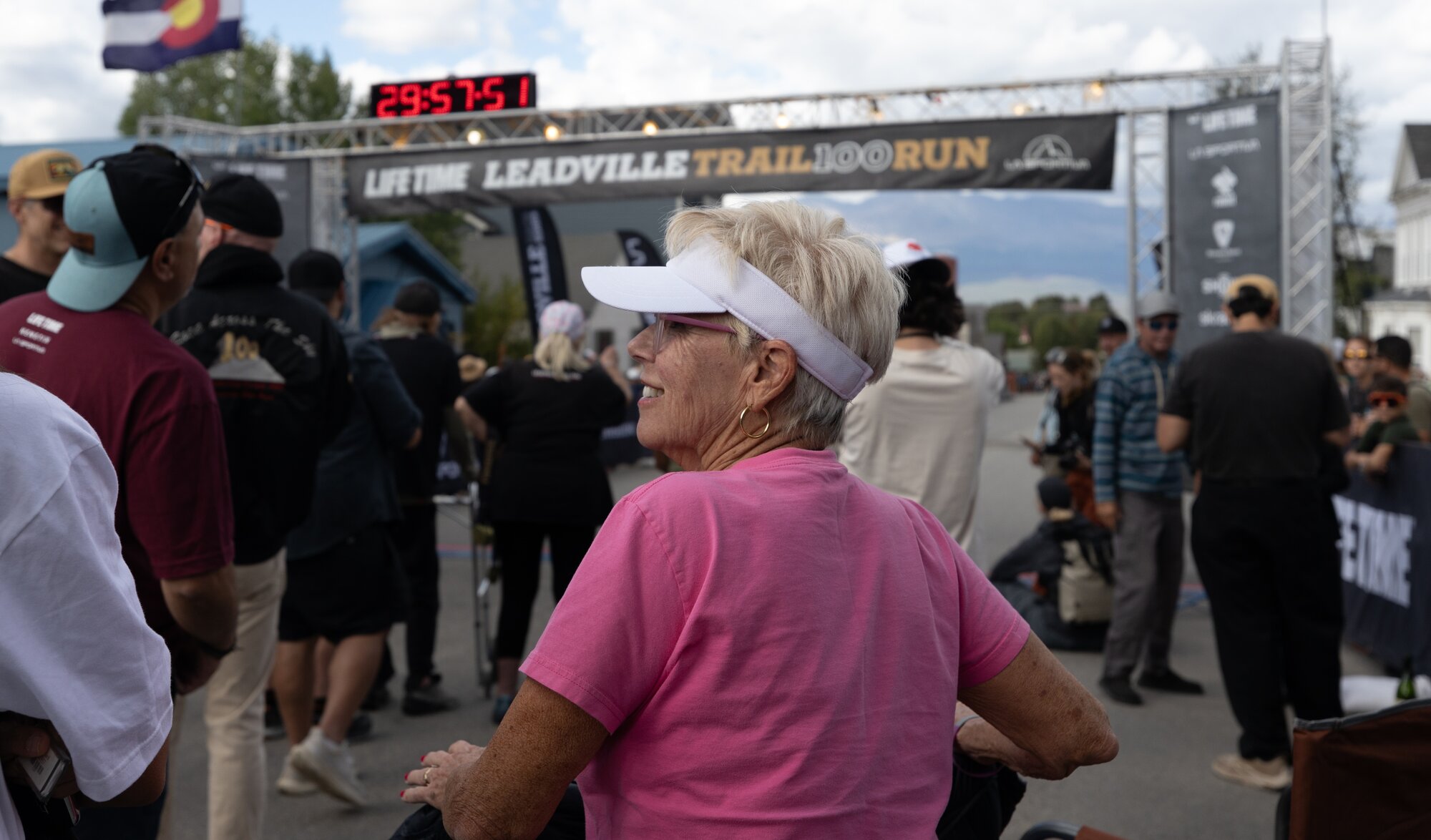
LEADVILLE, Colo. — Sandy Monahan is the friendly face that no one running the Leadville 100 wants to see.
Each year, hundreds of runners travel to Lake County to attempt one of the world’s most iconic ultramarathons: 100 miles in less than 30 hours with more than 13,000 feet of elevation gain. On average, half of the runners who start the Leadville 100 will not finish in time.
For the runners’ safety, the race organizers set various cut-off times throughout the course so stragglers are not left to fend for themselves in the mountains. Runners who don’t make it through each aid station before the designated time — or who decide to stop racing on their own — are taken off the course, their time-tracking strip cut from their wrist or racing bib.
Since 2003, Monahan has been the one to tell the unlucky half that their race is over. Now, the “Cut-Off Queen” — a name she dislikes — is cutting herself off. This year’s Leadville 100 Run, which concluded Aug. 23, marked Monahan’s last year in the role.
Lake County Sheriff Heath Speckman has successfully completed the Lead Challenge — a series of five Leadville races culminating in the Leadville 100 Run — three times. Monahan cut him off twice. He first met her 77 miles into the 100-mile race. “She cut the band off my wrist and said, ‘You're done.’”
Most ultramarathons have cut-off times for similar reasons to the Leadville 100. But Monahan’s position, as a designated, veteran volunteer tasked with enforcing those cut-offs, is unique to Leadville.
Monahan handles her job with care, insisting each runner she cuts gives her a hug. She always congratulates them on how far they came.
“There was no negativity to it, you know. Even though personally, I was taking it pretty hard and it was very direct, it was still very positive,” Speckman said.
Monahan first experienced the Leadville 100 in 1989 when Mike raced for the first time, crossing the finish line in under 25 hours. That first race weekend fell on the Monahans’ wedding anniversary. The race weekend still coincides with their anniversary. This year, they celebrated 52 years.
Each year her husband ran, Monahan crewed for him. She intercepted him along the course to give him hydration, fuel and encouragement. Mike ran 13 times. He finished 10 races.
“At one point I saw someone that was doing the cut-offs in a very cold manner, leaving people without any pleasure from what they had accomplished. And I decided that I wanted to have the opportunity to remove people from a course without making it a bitter hard thing,” Monahan said.
Monahan volunteered herself to handle the cut-offs once her husband’s racing days were over. Her career as a tax accountant prepared her well for delivering bad news.
At this year’s 11 p.m. cut-off, around the 64-mile mark, Monahan consoled a runner who she had to cut. He made it to the aid station before the cut-off and sat in a fold-out chair getting support from his crew. But even with Monahan stretching the cut-off time by a few minutes, he couldn’t find the physical strength to stand up and get over the time-tracking mat in time.
As Monahan spoke to him, asking him where he was from and congratulating him on making it that far, she also hugged and comforted his crew, sharing her own experience in that role. The group huddled together in the dark, the only light coming from Monahan’s mini flashlight. About 60% of racers finished on this year’s slightly altered course, which organizers rerouted due to the Willow Fire.
“She’s people-oriented. She reads people well,” Mike Monahan said about his wife.
The Monahans live in Laguna Beach, California, and travel to Leadville every year for the race. Sitting in the kitchen of the Leadville house that they stay in each year, Mike Monahan recalled the year he tried to quit the race and drive back with his wife. But she locked him out of the car, told him she’d meet him at the next aid station and left him.
He finished the race that year.
The Leadville 100 started in 1983 in an attempt to promote tourism in town after the devastating closure of Climax Mine left more than 3,000 people unemployed. Volunteers from the community made the grassroots event possible, and they still play an integral role in the success of the race, which is now owned by Life Time Fitness.
While Monahan travels between aid stations throughout the race to keep up with the cut-off times, hundreds of other volunteers are stationed throughout the course, providing water, food, medical treatment, moral support and keeping the stations running safely.
“The object was for the race to give the community back, but people gave their time and their energy, voluntarily just showing up in places,” Monahan said.
The Monahans are close friends — almost family — with race founders Ken Chlouber and Merilee Maupin, who they met in 1989. Sandy walked into the race office and introduced herself to Maupin, who sat at a typewriter, manually re-organizing and alphabetizing the race entries. Monahan offered to help and the two became friends.
Monahan eventually helped Maupin computerize the entry records. Back when the race had fewer runners, the pair of friends would write personalized notes about each racer for the announcer to read when they crossed the finish line.
The Monahans found a tight-knit community through the Leadville 100, which is part of the reason why they keep coming back decades after competing in the race. Sandy Monahan doesn’t think the modern era of the race creates as much opportunity for making those connections.
“The large numbers [of participants] and the professionalization of the race makes it just a little more sterile. People come to the event and leave. There's still people that hang on like we did, and there are still a group of people like that, but that is not as telling as it used to be,” she said.
Being the Cut-Off Queen is a nocturnal position. The last four cut-offs in this year’s race happened at 11 p.m., 2 a.m., 3:45 a.m. and 5:30 a.m. Monahan worked all of them and showed up to watch many of the runners finish during the last hour of the race, which ends at 10 a.m. — 30 hours after the start.
This exhausting schedule is the main reason why Monahan is ready to step away from the role. The Monahans still plan to visit Leadville each year for the race.
“If you want this job, you better not have a bedtime,” Monahan said to Madeline Moyer, the volunteer slated to fill her shoes next year, during the 11 p.m. cut-off. Moyer directs a run club in Leadville called Pastime Run Club, which welcomes runners of all speeds.
Throughout this year’s race, Moyer, 35, joined Monahan for several of the cut-offs to observe how she worked and to deliver several race-ending conversations of her own.
“I learned [that] a really good hug goes a really long way,” Moyer said. “Even the toughest of guys, the tallest, burliest men, really do want a hug from a petite, small woman, telling them that they did a good job.”
Based on facts, either observed and verified firsthand by the reporter, or reported and verified from knowledgeable sources. To read more about why you can trust the journalism of Rocky Mountain PBS, please visit our editorial standards and practices page.