
Three years after moose attack, Boulder County woman finally feels like herself again
share
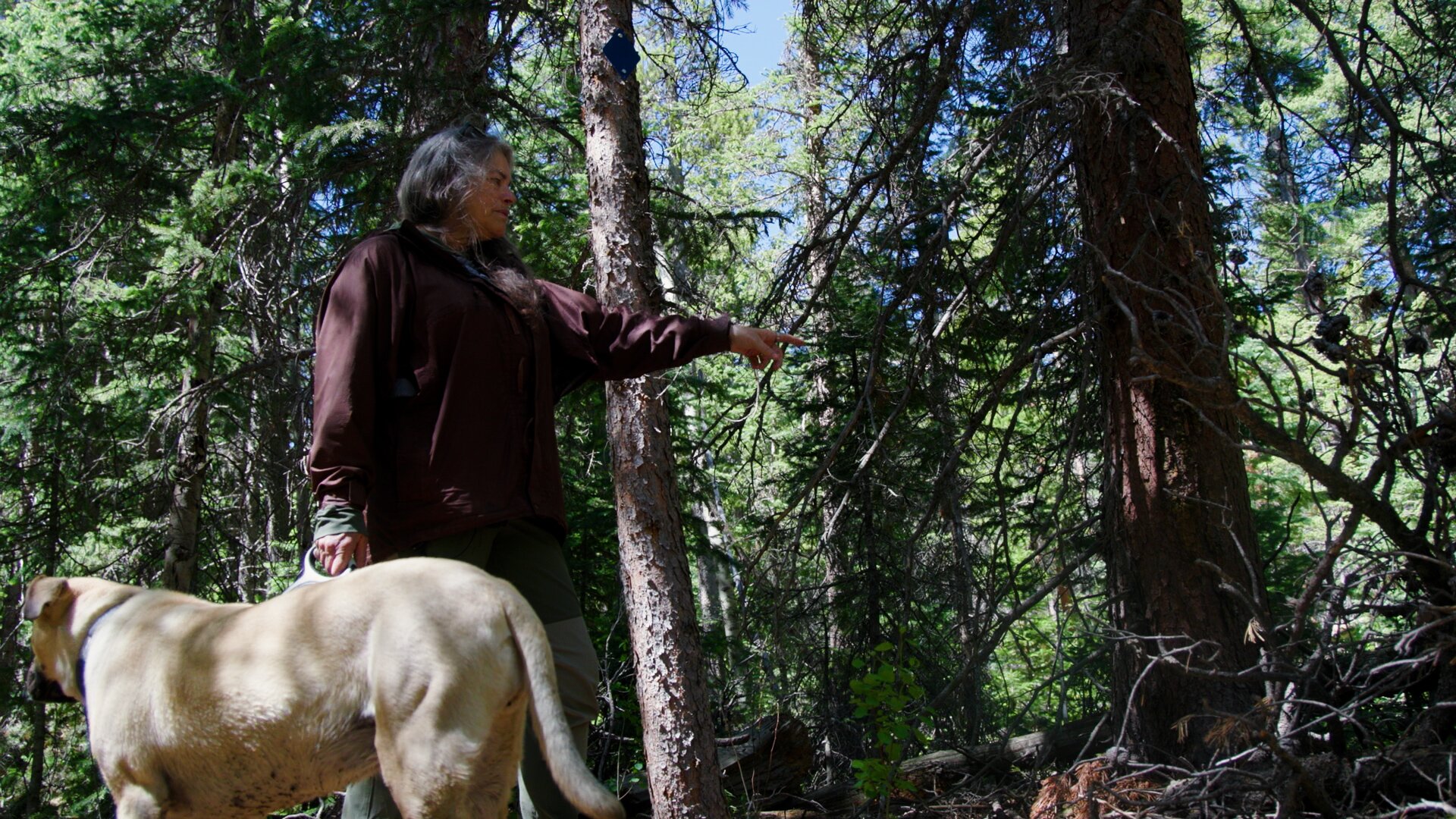
BOULDER COUNTY, Colo. — Taking a hike on the South Saint Vrain trail was practically a daily routine for Chris Ray and her dog, Nala.
Now, she won't go on that trail alone, still fearful three years after a moose charged her and her dog.
“I thought maybe I would never recover from that because I'm 62. It just feels great to be past all those injuries,” Ray said.
Minutes into her hike on Sept. 20 2023, Ray heard an animal cross the creek. A stand of lodgepole pine blocked her view of the creek, but Ray — who frequently saw wildlife near her home — wasn’t worried.
“We just kept hiking because, hey, whatever it was, it ran away,” Ray said.
Then, a short, guttural sound punched the air behind her.
“I really didn’t know what it was,” she said.
She heard the sound again, turning to see a moose charging at full speed.
“I could tell it was aiming right for me,” Ray said.
Ray leapt towards the nearest tree, but her foot snagged a piece of old barbed wire.
She hit the dirt face-first, her dog still on its leash. The moose trampled Ray, clobbering her back with its hooves.
Ray lifted her head. She was still alive. But the moose was wheeling around for a second pass. She covered her head with her arm as the moose trampled her a second time.
“I could barely move, but I got myself behind a tree somehow,” Ray said. Nala now stood between Ray and the moose. Ray yanked on Nala’s leash, but it was wrapped around a tree.
The moose charged again, this time headed for Nala. Nala jumped out of the way at the last second.
“She had to do that three times. The third time she came after Nala, and missed, she just trotted off,” Ray said.
Without cell service, Ray knew she needed to get herself back to safety. She feared the extent of her injuries.
Ray managed to walk down the rocky trail back to the road, then hobbled to a neighbor’s house. “I made it to their doorstep, laid down on their floor, and that was it,” Ray said.
That was in 2023. The moose broke Ray’s back in three places, as well as a rib and her sternum. She credits the five-gallon water jug she was carrying at the time with saving her life by absorbing the impact of the hooves.
In addition to the physical toll, the attack left her with a newfound fear of moose.
Weighing up to 1,000 pounds and capable of running up to 35 miles per hour, moose are one of Colorado’s most dangerous wildlife species. Because moose have few natural predators, they tend to show less fear towards humans.
Since 2017, moose have attacked 33 people in Colorado, according to Colorado Parks and Wildlife. Earlier this summer, a moose charged a man and his two dogs near Winter Park, injuring him.
Moose encounters tend to spike during calving season, which runs from mid-May to mid-June.
“[Moose] are pretty laid back unless it’s a cow moose with a calf. They will aggressively defend that calf,” CPW big game manager, Andy Holland, said.
The National Park Service recommends visitors give moose at least 120 feet, or about three bus-lengths.
“If a moose has laid-back ears, pawing the ground, licks its snout, or changes its direction to face you, you are too close and need to back away. If a moose charges, seek shelter behind large objects like trees or boulders to create an obstacle in its path,” CPW advises.
Dogs may elevate the chance of moose encounters. Twenty-three of the 33 attacks on record in Colorado involved people with dogs, according to CPW.
“What happens a lot is if people are hiking with their dog off leash the moose will see the dog as a threat to its calf. And then it will go to stomp the dog, and the dog will run back to the owner. And so here comes the dog with a really angry cow moose right on its heels. And then the owner will get injured,” Holland said.
Although conflicts remain rare, they can still happen even when people adhere to best practices. Ray’s dog Nala was leashed before the attack. Most attacks take place in counties with large moose populations, such as Boulder, Grand and Teller counties.
Since the Colorado Division of Wildlife reintroduced moose to the state in 1978, the species has expanded in size and territory. Roughly 3,500 moose live in the state’s mountainous areas, occasionally traveling as far east as Greeley.
“I really thought that I knew how to avoid them,” said Ray, who frequently encountered moose during field work.
Despite the attack, Ray doesn’t hold “a grudge against moose.”
“I love moose,” she said. “They're amazing creatures.”
Type of story: News
Based on facts, either observed and verified firsthand by the reporter, or reported and verified from knowledgeable sources. To read more about why you can trust the journalism of Rocky Mountain PBS, please visit our editorial standards and practices page.
Based on facts, either observed and verified firsthand by the reporter, or reported and verified from knowledgeable sources. To read more about why you can trust the journalism of Rocky Mountain PBS, please visit our editorial standards and practices page.