
He wants to ‘thrive’ in prison. This years-long mural project helps him do that
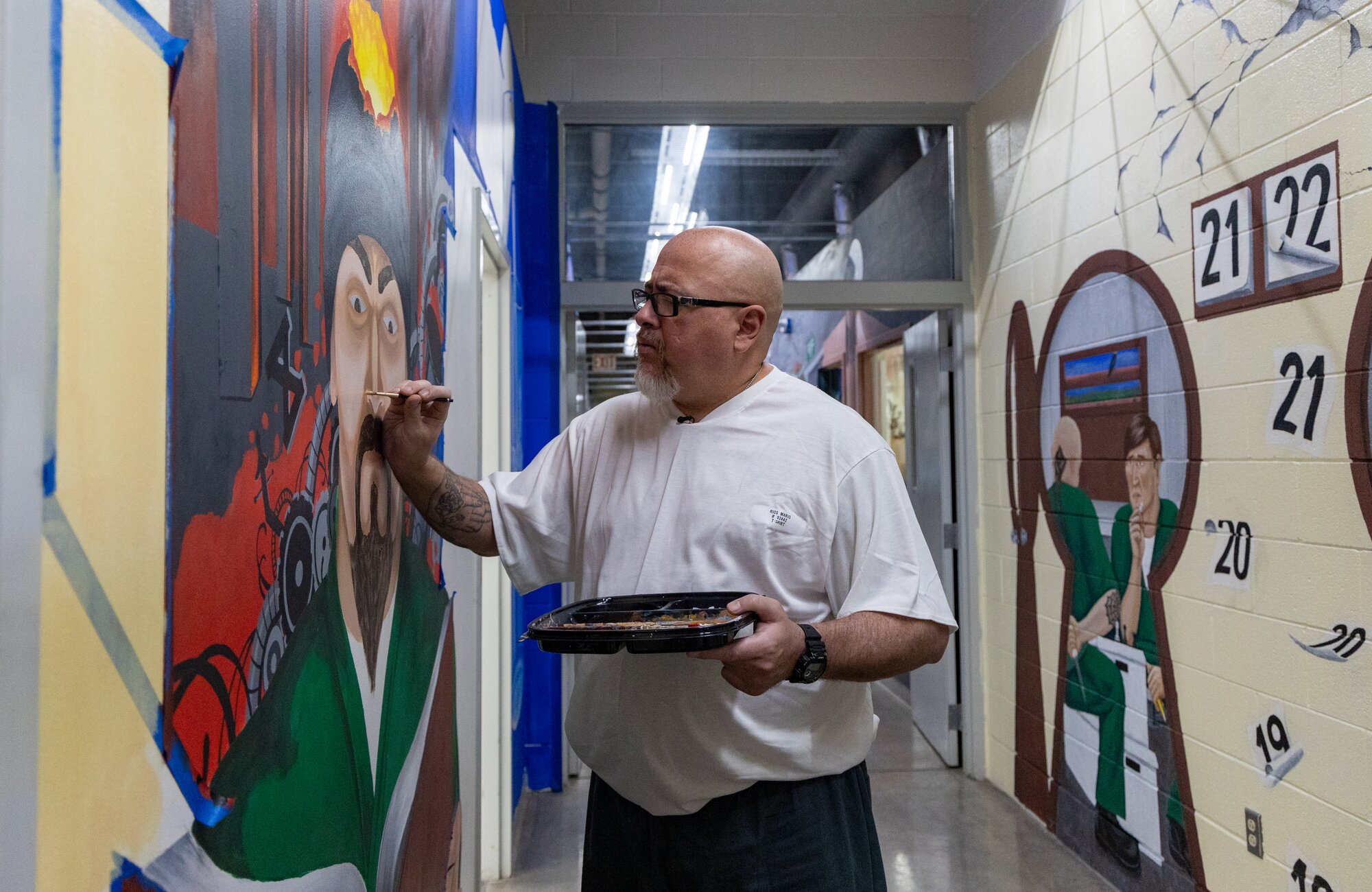
Rios has always been an artist. As a kid, he got in trouble for drawing on the walls at his grandma’s house. (Now, he finally has permission to draw on the walls.) Rios said being able to create art and use his imagination has kept him focused on bettering himself in prison. Rios sells his artwork to people on the outside to make some money on the inside. Incarcerated people need money to pay restitution or buy items from the canteen (like stamps, clothing or hobby supplies).
Studies show that art is an effective therapeutic tool for incarcerated people struggling with their mental health. When people in prison regularly use painting to express their feelings, it leads to reduced anxiety and depression and decreased recidivism rates (or rates of re-offending after release), according to a 2024 study.
Rios’ mural is not part of an official art therapy program offered by the facility, but it provides similar benefits, AVCF mental health supervisor Jessy Hainbach said.
“I’ve often found that giving clients the ability to really tell their story and use their talents is really impactful, not only for them, but for others,” she said.
Hainbach said her other incarcerated clients are often engrossed by the mural and its new additions when they enter the mental health wing. They notice pieces of the story that they relate to, like family trauma or addiction, and it makes them feel less alone.
AVCF is a medium-security prison. When Rios is in the hallway working on the mural, a staff member like Hainbach is present to monitor the area, but the project doesn’t require additional security measures, she said.
Hainbach started working at AVCF last October. She described Rios as an empathic person who brings a lot of life into the mental health department — which is very different from how Rios described himself 15 years ago. Rios said people are often surprised to find out he’s serving a life sentence. They assume he has a release date because he’s so optimistic.
Though the scale of Rios’ project is unique, incarcerated people have created murals at other facilities within the Colorado Department of Corrections, including Hainbach’s previous facility, Centennial Correctional Facility in Cañon City. At CCF, she said, one of her incarcerated clients painted a mural in the visiting area that featured characters from different children’s movies to make the visiting experience more fun and inviting for kids. Incarcerated people at Four Mile Correctional Facility and Colorado State Penitentiary have also had opportunities to decorate the walls with paintings.
When the partnership between CDOC and the University of Denver Prison Arts Initiative (DUPAI) ended in August 2023 (after the contract between the two parties expired), several successful prisons arts programs were cut or disrupted, like the Inside Wire radio show, The Inside Report newspaper and the Unchained Voices art exhibit, which Rios has participated in.
Some of those arts opportunities are slowly coming back in different formats, like Unchained Voices returning as an independent nonprofit and a fledgling prison newspaper program by the nonprofit Unbound Authors.
Over the hundreds of hours that Rios has spent on the mural, he’s had occasional help from other incarcerated men. Each left their imprint on the piece. Rios is a mental health peer assistant at the prison, a role in which he “helps guys find their true north,” he said. Mental health peer assistants (a role that is being phased out and absorbed under a new program in CDOC) are trained by a clinician at the prison, and they serve as role models for their incarcerated peers, encouraging healthy ways to cope with mental health challenges, like painting.
“To be able to help somebody who might never get out of prison or is getting out within five months, to be able to allow them to come in and share in the experience [of the mural] gives them a different way of looking at their own life,” Rios said. “That somebody is helping them be a part of something bigger than themselves, a lot of guys have not had that. To be able to help some of these guys get that, it’s rewarding.”
Rios plans to complete the mural by mid-June and hopes to coordinate an unveiling ceremony this summer with some members of the public.
Based on facts, either observed and verified firsthand by the reporter, or reported and verified from knowledgeable sources. To read more about why you can trust the journalism of Rocky Mountain PBS, please visit our editorial standards and practices page.