
Colorado communities are switching from Flock to Axon. Is it more private?
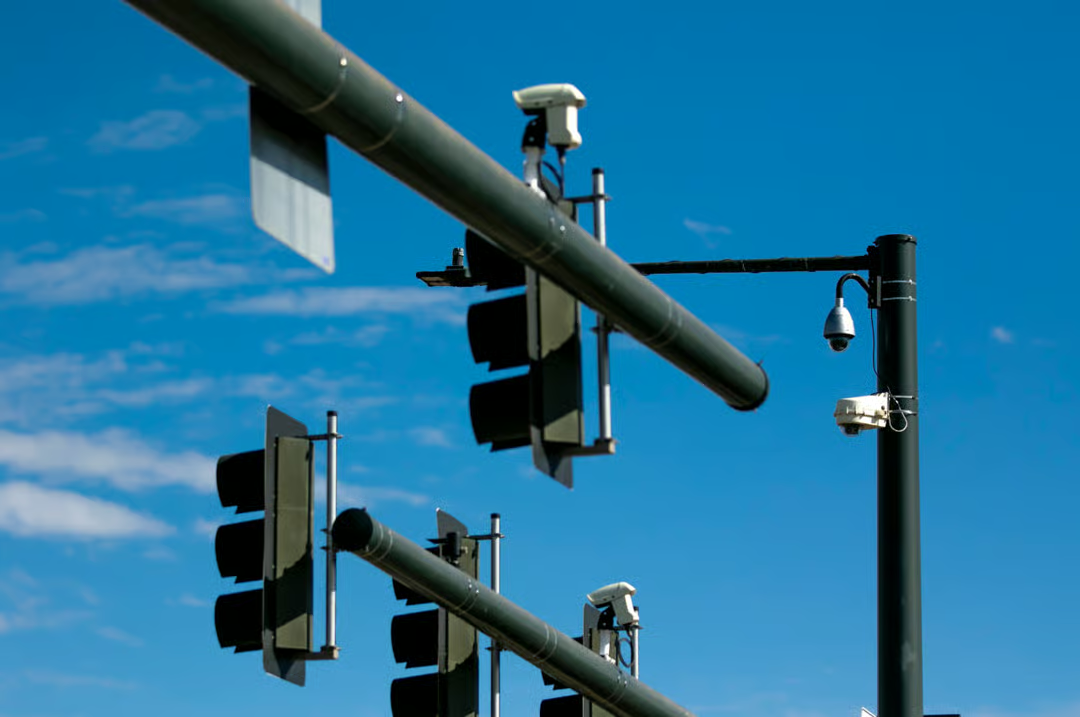
DURANGO, Colo. — Flock Safety cameras have been at the center of growing backlash following stories of their abuse across the country.
Flock provides automated license plate readers, or ALPRs, which photograph passing vehicles and allow police to search license plate and vehicle information during investigations. More than 5,000 law enforcement agencies use the technology. Earlier this year, The Washington Post published an investigation on the rogue police officers using these advanced traffic cameras for stalking. Most states have recorded instances of vandalized Flock cameras.
In an analysis published by The Conversation, criminal procedure scholar Henry F. Fradella explained how Flock’s network can turn local cameras into part of a much larger system for tracking vehicles across jurisdictions. Flock has responded to criticism by announcing new safeguards. The company now recommends a seven-day retention period for ALPR data and has introduced required case codes, stronger account security and tools designed to flag possible misuse.
Across Colorado, some law enforcement agencies are moving away from Flock in response to community pushback. Denver, Douglas County, Longmont and Durango have switched — or announced plans to switch — to Axon.
Durango Police said Axon already provides technology the department uses, including body cameras and in-car video. The department said Axon’s license plate reader system can integrate with that existing technology.
That raises the questions: How different is Axon from Flock, and will residents feel more comfortable about the switch?
Rocky Mountain PBS spoke with Keith Guzik, chair of the sociology department at the University of Colorado Denver. Guzik studies the intersection of law and technology, including how police departments adopt and use new technologies.
The interview has been edited for length and clarity.
Rocky Mountain PBS: Why is the push back against Flock happening now?
Keith Guzik: I was actually surprised to see the controversy around license plate readers because this technology has been around for at least a decade.
When I was studying body-worn cameras years ago, license plate readers were already being used. At the time, they were almost a boring technology compared with body cameras.
I think what has changed is that there is a broader public concern about technology now. Ten years ago, body cameras were often seen as a solution to police abuse. Today, people are more skeptical about the costs of technology, especially when it comes to privacy.
That concern is happening alongside debates over artificial intelligence and facial recognition. People are asking more questions about what these technologies can do and what happens to the information they collect.
RMPBS: At the most basic level, what is the difference between Flock and Axon when it comes to license plate readers?
KG: I think one of the biggest differences is the breadth of the networks these cameras are connected to.
Flock’s system has a nationwide reach focused on license plate reading and sharing between departments. Axon, on the other hand, connects license plate readers with other technologies police departments may already use, including body-worn cameras, dashboard cameras and its Evidence.com system.
We often reduce these technological systems down to the word “camera.” But the camera is really a sensing technology connected to a much broader system that collects, processes and shares data.
For departments that already use Axon products, adding license plate readers can also be easier because they already have a relationship with the company and its technology.
RMPBS: When a police department moves from Flock to Axon, are there privacy risks that could decrease?
KG: Potentially, but a lot depends on implementation.
Departments can differ substantially in how they set up the same technology. They can have different contracts, different permissions and different rules governing whether an officer, investigator or other user can access information.
Axon’s system provides ways to document searches and audit access. But even with those tools, local departments still make important decisions about permissions and how they use the system.
[Note: Axon says its current ALPR system requires law enforcement users to select an offense category before conducting a search. Agencies can also require a case number, and administrators can review ALPR search activity through audit reports.]
RMPBS: So how much of the privacy difference comes from Flock versus Axon, and how much comes from the individual police department?
KG: The organizational context matters enormously.
You can build safeguards into a system, but individual users can still misuse access. That's why departments need internal monitoring, and why there also needs to be some form of outside oversight.
The technology itself matters, but the relationship between a police department and its community also determines how transparent the department is and how much scrutiny there is over the system.
With license plate readers, that kind of third-party oversight is still much more of an aspiration than something that's consistently built into how these systems operate.
RMPBS: Axon already provides body cameras, in-car cameras and evidence-management technology. What happens when license plate information becomes part of that larger system?
KG: That creates a different kind of concern.
Flock has attracted attention because of how broadly vehicle information can be searched across jurisdictions. Axon, meanwhile, can integrate license plate information with other types of data that a police department already uses.
From a department's perspective, that ecosystem can be useful. Police may already have relationships with Axon and already use its systems.
But privacy concerns don't disappear. You're potentially bringing different sources of information together. That's another reason oversight and access controls are important.
RMPBS: For someone who was concerned about Flock and now hears that their police department is switching to Axon, should they feel more reassured?
KG: I think vigilance is still needed.
Public agencies have to earn and maintain public trust. With body-worn cameras, we saw substantial differences in how willing police departments were to share information with communities about how those cameras were being used.
Something similar is needed with license plate readers.
These systems should be discussed at town halls and municipal meetings. Police departments should present meaningful information to the public about how they're being used, and there should ideally be independent oversight that can monitor that use.
Changing the technology provider doesn't eliminate the need for that.
RMPBS: License plate readers can also help police find stolen cars, suspects or missing people. How should communities balance those public-safety benefits with privacy?
KG: There is real public-safety value to the technology.
That's why it's difficult to simply say, “Don't use this technology.” These are powerful tools, but powerful technologies can also be invasive.
So the question becomes what uses are appropriate and what safeguards we put around them.
Ideally, you have broader legal standards setting a baseline, states adding their own protections and then local departments developing policies that reflect their communities.
The answer may differ from community to community, but what we do know is that there needs to be public oversight.
RMPBS: What should residents pay attention to as their communities adopt these systems?
KG: Technologies are almost never wholly good or wholly bad.
The social and legal context in which a technology is implemented is going to determine a lot about its value — and its risks — for a particular community.
That's why the debates happening in places such as Durango, Denver and Thornton are healthy. The goal doesn't necessarily have to be eliminating the technology. It's about finding rules that allow communities to get the public-safety value while putting meaningful limits around its use.
That requires informed citizens, public participation and continued scrutiny to make sure policies are actually being followed.
An interview to provide a single perspective, edited for clarity and obvious falsehoods. To read more about why you can trust the journalism of Rocky Mountain PBS, please visit our editorial standards and practices page.