
Rising HOA fees squeeze residents in Boulder’s ‘permanently’ affordable homeownership program
share
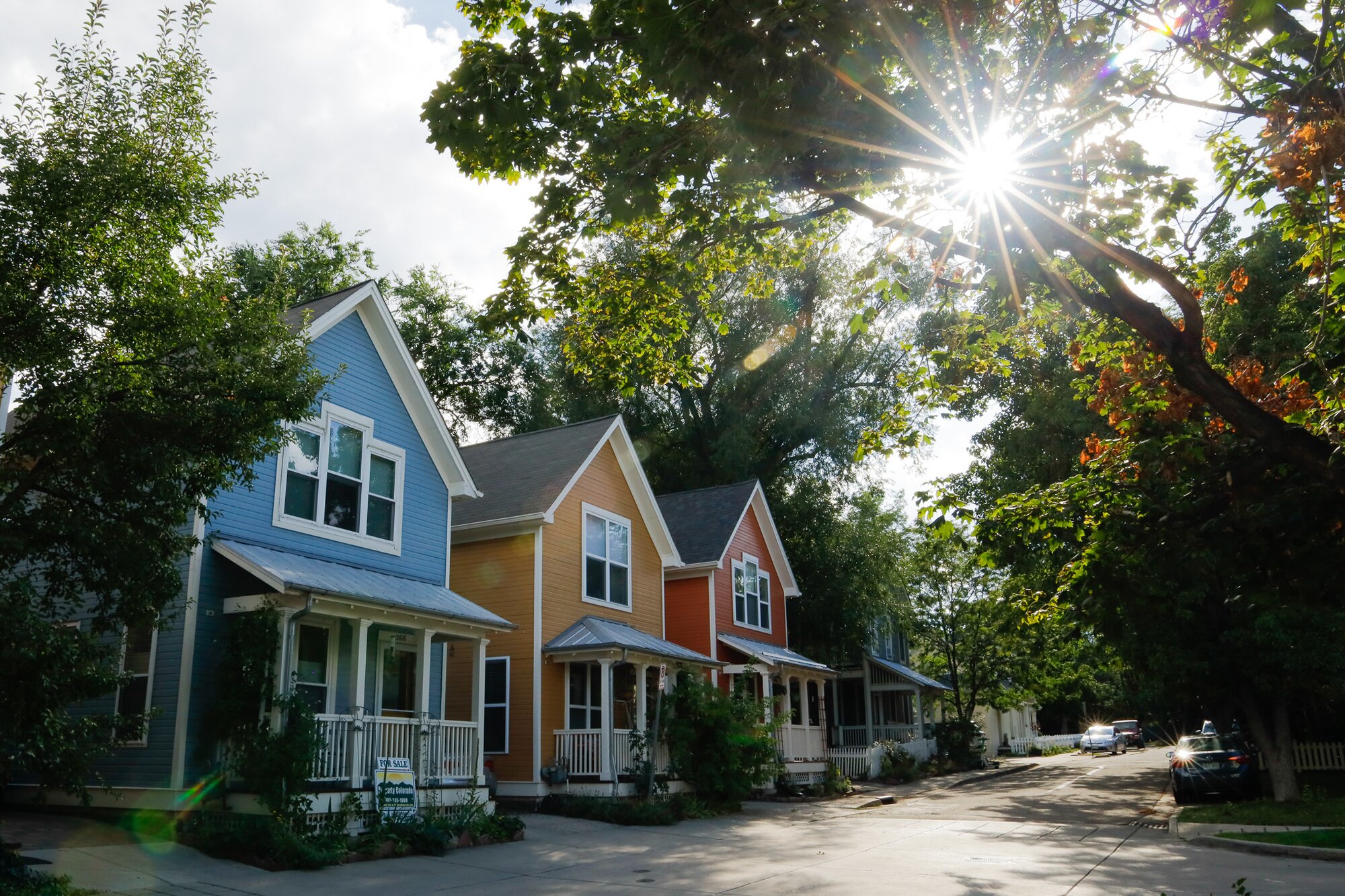
BOULDER, Colo. — After four and a half years of bouncing between rentals, Henriette Gregorio got the chance to buy a house through the City of Boulder's Permanently Affordable Homes Program in 2021.
Gregorio, who moved to Colorado in 2004, scoured listings and eventually settled on a two-story townhouse located in North Boulder. She paid $220,000 for the property. Her monthly mortgage payment was $1,100 and her monthly homeowners association fee was $398.
Owning a home helped Gregorio feel like she belonged in Boulder, one of the most expensive places to live in the country. In her free time, Gregorio enjoys hiking along the Hogback Ridge Trail near her home, dancing to international folk music at the Avalon Ballroom and participating in historical reenactments.
But rising fees are threatening that sense of belonging. Since buying her house, Gregorio's HOA fees have doubled. She now pays $813 per month, or $9,756 per year, to the HOA. If her fees continue to climb at the same rate, they will equal her monthly mortgage payment in two years.
Gregorio, who now works as a freelance writer, assistant and project manager, argues that rising HOA fees threaten the long-term stability of Boulder’s affordable housing program.
"The fundamental public purpose of the affordability program is ‘permanent’ affordability. The name is a misnomer,” she said. “There is no affordability preservation mechanism to assist existing homeowners.”
Across Colorado, wildfires and hail have driven up insurance premiums. That, combined with rising labor costs for landscaping and construction, have led many HOAs to raise rates. Rocky Mountain PBS reached out to Five Keys Property Management, which manages communications for Gregorio’s HOA, but did not receive a response.
More than 2.6 million Coloradans — nearly half of the state’s population — live in homes governed by a homeowners association, which wield enormous power over residents. In Boulder, 57.5% of property listings are part of an HOA, higher than the U.S. average of 40.5%. The median HOA fee in the state is $140 per month. In 2022, Sen. Jeff Bridges introduced a bill that would’ve capped HOA fee increases, but lawmakers shelved the bill, arguing it could prevent communities from funding necessary maintenance.
When HOAs defer maintenance or are underbudgeted, homeowners can face large, unexpected special assessments to cover emergency projects. Mortgage lenders have “blacklisted” at least 200 condo associations in the state due to HOAs not meeting insurance standards or for deferring essential maintenance. When condos are blacklisted, buyers cannot use conventional loans to buy the property.
Gregorio’s home is one of roughly 800 houses part of the Boulder’s homeownership program, which started in the 1990s. Boulder acquires homes on the open market, through annexation and by constructing modular houses. The city then sells the properties at below market rates to income-qualified buyers. If owners choose to sell, homes remain in the program.
Although HOA fees are included in the city's affordability calculation at the time of sale, the city has no control over the fees HOA set to cover insurance, maintenance and upkeep.
In a 2025 survey of homeowners conducted by the city, in which 49% of residents responded, 95% of homeowners in the program had an HOA. The average HOA fee among respondents was $370.
During the public comment period at a Boulder City Council meeting Aug. 6, Gregorio shared her concerns about rising HOA fees.
“I’m not asking the city to pay my HOA dues. I am asking the city to examine whether the Permanently Affordable Housing Program has a policy gap that no individual homeowner can solve,” said Gregorio at the meeting.
“It’s a real challenge to find ways to help people in that situation,” said Mayor Aaron Brockett, in an interview the week after the meeting. “I personally live in a townhouse that’s in an HOA that has rising fees… so my own neighbors and myself are affected by these issues as well.”
Boulder officials were quick to acknowledge the challenge rising HOA fees pose, but offered few specifics as to what could be done.
“HOA rules are regulated by the state, so we don't have a lot we can do,” said Hollie Hendrikson, senior project manager with the City of Boulder’s Housing and Human Services Department.
Gregorio is not the first homeowner in the program to sound the alarm.
In 2018, Boulder Weekly reported how surging HOA fees were affecting residents in the program. The issue dates back to at least 2010, when the Boulder City Council created a task force to address affordability issues. HOA fees were one of eight topics the task force explored.
Since then, the city has created a program to provide assistance to homeowners facing special assessments from their HOA. Special assessments are one time fees charged to homeowners on top of monthly dues to cover large, unexpected projects.
The city’s special assessment program covers part or all of an HOA special assessment for "permanently affordable owners who do not have their own funds to cover the assessment,” said Lyndsy Morse-Casillas, a spokesperson with the city in an email response. “In exchange for the grant, the owner agrees to a reduction in their future maximum resale price in the amount of the grant.”
Prior to purchasing a home through the program, all home buyers are required to take homebuying classes, which include information about HOA fees, said Hendrikson.
“When people enter into the program, there's a lot of education and a lot of work by the program staff to talk about HOAs, to talk about the burden, what that looks like, the possibility of special assessments; it's not like we're hiding any of this information,” Hendrickson said.
In cases where HOA fees do rise, the city reserves the right to sell the home to buyers with higher income limits, though Morse-Casillas was not aware of any instances in which this happened as a result of HOA fee hikes.
“In the last two years, only a handful of affordable sellers have indicated that rising HOA fees were at least a part of the decision of why they were selling. Approximately four out of 81 relevant sales, or less than 5%,” said Morse-Casillas.
Prior to voicing her concerns to the City Council, Gregorio spoke at a state senate town hall on June 2, sharing her concerns with Colorado Democratic state Senators Judy Amabile and James Coleman.
Sen. Amabile’s staff sent Gregorio an email suggesting she reach out to social support groups for emergency financial assistance or join her HOA board following the meeting.
Gregorio described the suggestions as “patronizing.” Emergency assistance will not address underlying affordability issues, she said. Rocky Mountain PBS reached out to Sen. Amabile’s office for this story, but did not hear back.
“I'm finding that the city is pointing to the state saying the state is the one who has the authority and the jurisdiction to make regulatory changes. The state is pointing the finger at the city and saying it's their program, it's their responsibility,” said Gregorio. “Nobody wants to deal with the hot potato. It's easier to say, go attend your budget meetings. Go to emergency services and get help.”
For the time being, Gregorio has no plans to sell. She hopes that by raising the issue publicly, other homeowners will speak up too and put pressure on leaders to create meaningful change.
“There's an old fairy tale about the guy who sticks a finger in the wall of the dam that has a crack. That's what we got going on. The crack is going to blow,” said Gregorio. “It's bigger than me. It's bigger than any one homeowner.”
Type of story: News
Based on facts, either observed and verified firsthand by the reporter, or reported and verified from knowledgeable sources. To read more about why you can trust the journalism of Rocky Mountain PBS, please visit our editorial standards and practices page.
Based on facts, either observed and verified firsthand by the reporter, or reported and verified from knowledgeable sources. To read more about why you can trust the journalism of Rocky Mountain PBS, please visit our editorial standards and practices page.