
In Baker, gardeners fundraise to save their decades-old community plot
share
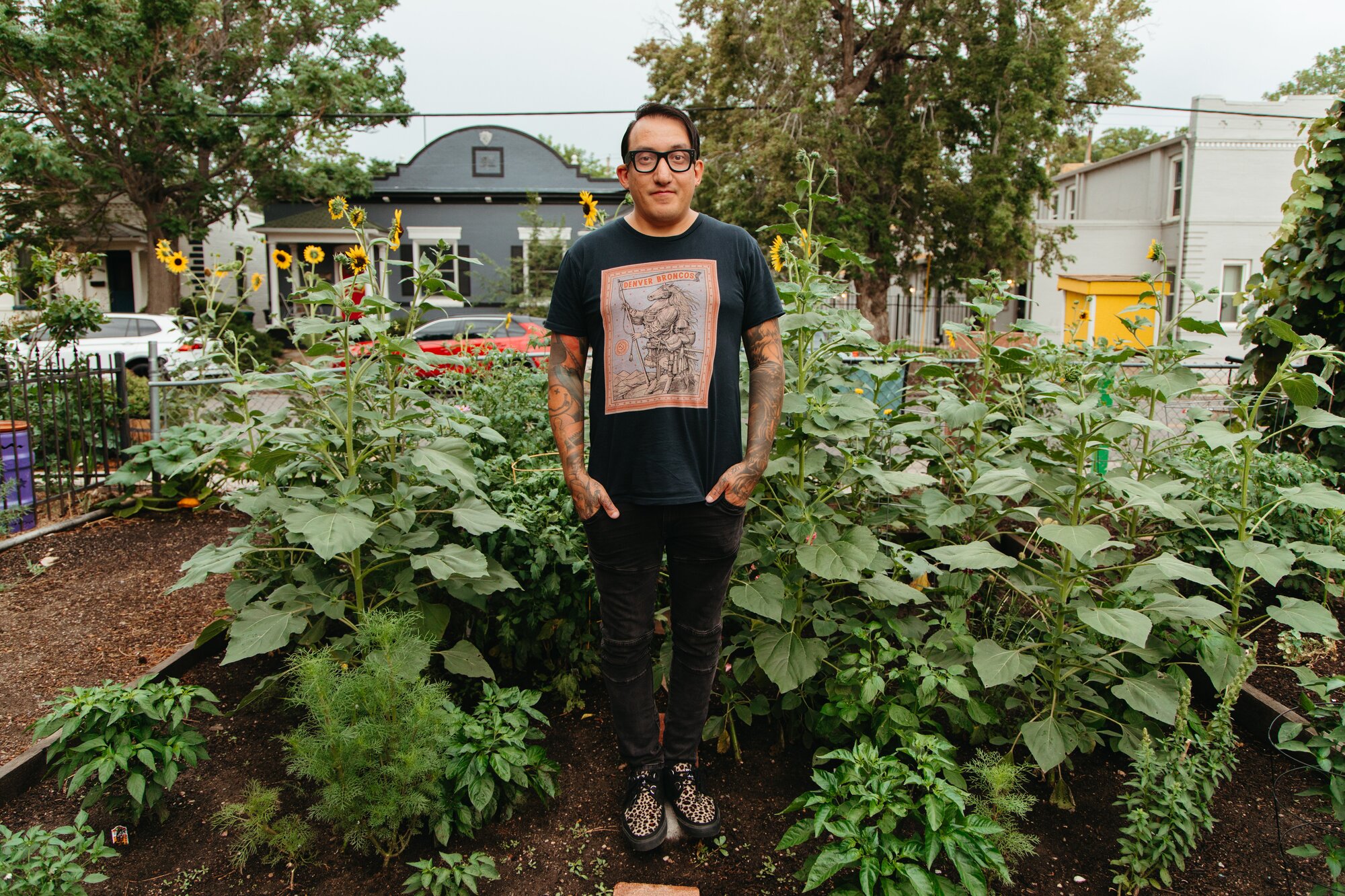
DENVER — After three years on the wait list, Wes Luna and his wife, Amy, finally got a plot in the Historic Baker Community Garden, a verdant, vegetable-packed patch of land tucked between homes near the intersection of Bayaud and Bannock.
The Lunas cleaned up their 12-by-16 foot plot, visiting several times a week to tend to their new garden. Five months later, tomatoes, jalapeños, and pattypan squash are all thriving in the Denver heat. A group of passersby stopped to observe the garden from the fence and called out how healthy the soil looked.
“We cleaned it up, but it was looking pretty rough when we got it,” said Wes Luna. The plot had been abandoned from the previous year.
But the Lunas and the other 21 plot holders at the garden are at risk of losing the entire property in the coming months.
Denver Urban Gardens, which manages the garden, is a nonprofit dating back to the 70s that develops and maintains community gardens throughout the city. But DUG does not own the land the Baker garden sits on. That land belongs to Providence Investment Co. who have shared the site with DUG since 1991. Unless residents can raise the money to buy the land before the fall, the property will be sold on the open market. Based on a third-party valuation, DUG is trying to raise $600,000 to buy the land.
Due to the death of a business partner, Providence Investment Co. is dissolving its company and liquidating assets, including the garden. But the owners gave DUG the chance to buy the plot before listing it for sale publicly.
Rocky Mountain PBS reached out to Providence Investment Co. for comment but did not hear back.
“The property owner has been very generous and kind with the use of this land and paying off the vacant land tax fees,” said Ryan McCann, garden leader at the Baker Garden.
Like the rest of the garden leaders, McCann is a volunteer. He works for the city in the Department of Transportation and Infrastructure, managing Denver’s micromobility programs. He’s been involved in the Baker Garden for more than a decade.
McCann and DUG heard about Providence Investment’s plans to sell the land in December; DUG started to brainstorm ways to purchase the land. Despite exploring low-interest loans, private investors, and land trusts to fund a purchase, nothing panned out, and DUG now hopes that crowdsourcing will raise enough money to buy the land.
“We're looking for meaningful progress towards the goal in just a few months to be able to pitch to the property owner,” said Marisa Loury, director of garden leadership at DUG.
The monumental task is something that DUG has never had to do before. Purchasing land for the gardens is not in the model of the organization. Out of over 200 community gardens throughout the city in various schools and parks, DUG only owns the land beneath seven of them. Those they do own were more or less donated to them, said Loury, for dollar sales.
“That's really our model is to reutilize land in partnership with others more so than any desire to own it,” said Loury.
The crowdsourcing was launched on July 25, and so far, only about four thousand has been collected based on data shown on the portal.
“I'm hoping like a Bo Nix out there buys the land, some kind of hero,” said McCann. Yet both he and Loury are thankful that people are donating what they can.
If the campaign doesn't reach its goal, gardeners with plots at the Baker garden will be relocated to nearby community gardens. Any funds that don’t make it to the sale will go into an endowment fund to protect other gardens from similar situations in the future, according to DUG.
Currently, there are no plans to open new gardens, even if the Baker garden is lost. Part of DUG’s current strategic plan is to focus on the gardens they already have.
“Even though there's really long wait lists, and it would be really amazing to keep building gardens, something we really want to focus on is going really deep in [existing] gardens, making sure that all of their needs are met before we just continue expanding onwards,” said Loury.
The gardens provide perks to more than just those with coveted plots. The Historic Baker garden has a food pantry, which gets stocked regularly by those who grow vegetables in the garden and is available for anyone who passes by. A little free library is constantly cycling books through its inventory.
“You don't have to be a plot holder to feel so connected to [the garden] because you're getting tomatoes from it. You're meeting people. You're stopping and looking at art on the outside. You're getting a book, and so there are so many ways to interact with it,” said Loury. “Even if you're not into gardening, even if you're on the wait list, even if you're overwhelmed and not able to commit to a garden to participate in, you still get those community benefits.”
That sense of community is what Luna said drew him and his wife to the garden.
“It's such a draw to be here in gardening and community. And there's only so much green space left here, so it's a hot commodity in Baker,” said Loury.
And there’s only so much land in general. If the property owners do put the land on the market, Loury thinks it will go fast. Not even a mile south of the garden, the city is planning to build Santa Fe Yards, which will include a new stadium for the Denver Summit FC by 2028. That redevelopment also sits along the proposed Mile High Line, a vision from Denver Mayor Mike Johnston’s administration to connect the city along the length of the Platte River and north through downtown.
“Property in this neighborhood is super desirable, and so the fear is that it would go away really quickly. We do plan to finish out at least this growing season, regardless of whether we do end up selling the land, so the gardeners will be able to garden until November,” said Loury.
It would give the Lunas about a year to utilize the garden, but they would prefer to stay longer. Though they are in the process of moving houses, Luna said he would still keep the plot even though they could just as easily garden at home. The sense of community is what draws them in.
“We really hope it doesn't go away. We're gonna keep trying everything we can,” said Luna. His wife is starting a social media campaign to spread the word about the garden.
Community members who wish to donate can do so at dug.org/save-baker.
Type of story: News
Based on facts, either observed and verified firsthand by the reporter, or reported and verified from knowledgeable sources. To read more about why you can trust the journalism of Rocky Mountain PBS, please visit our editorial standards and practices page.
Based on facts, either observed and verified firsthand by the reporter, or reported and verified from knowledgeable sources. To read more about why you can trust the journalism of Rocky Mountain PBS, please visit our editorial standards and practices page.