
Five Points affordable housing building honors Dr. Justina Ford
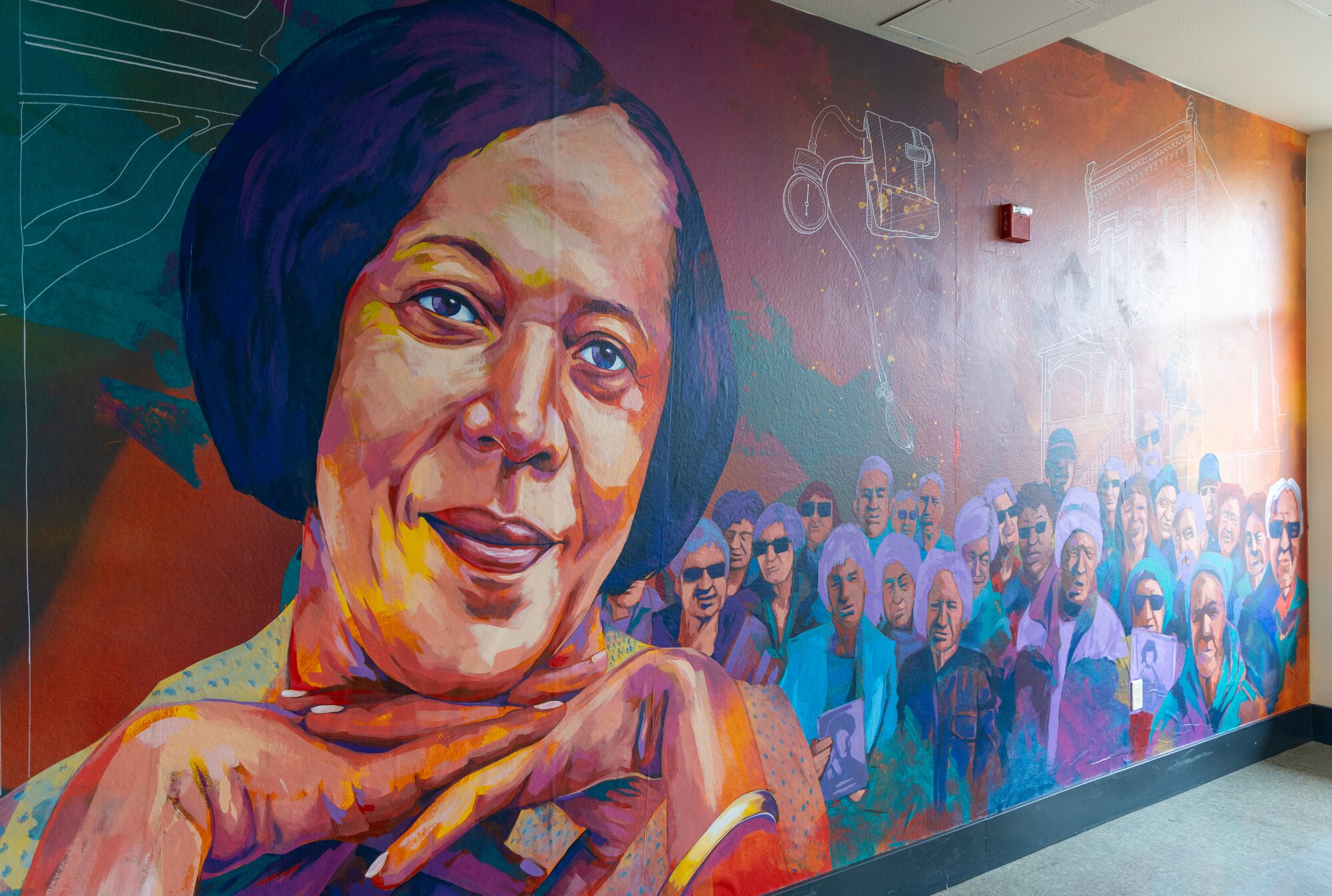
DENVER — Dr. Justina Ford’s name adorns plaques and statues across Denver, where she delivered more than 7,000 babies as the city’s first licensed Black woman physician. Now, an affordable housing building in Five Points, the neighborhood where she lived and worked for 50 years, bears her name.
The newly christened Justina at Five Points, formerly Brunetti Lofts, offers a rare commodity in Denver’s housing market: family-sized affordable housing units. The 23-unit building, built in 2005, has 19 three-bedroom units. Rents range from $840 to $1,893 per month. Residents must make between 30% and 60% of Denver’s area median income, and specific income requirements vary depending on the unit.
“I do believe that in the last, five, ten years, maybe a little longer, housing here in Colorado has just gone crazy. I mean, I have a little two-bedroom townhouse, and I can't afford to move back in the neighborhood I grew up in because of the pricing. And it's just crazy,” said Daphne Rice-Allen, chair of the board at the Black American West Museum and Heritage Center, which is housed in Ford’s historic home in Five Points.
Rice-Allen grew up in Clayton, which is northeast of Five Points. This cluster of neighborhoods in north Denver — Five Points, Cole, Whittier and Clayton — were among the areas deemed “hazardous” and “definitely declining” on the city’s 1938 “Residential Security Map,” which redlined neighborhoods with Black, Mexican and lower-income residents.
At that time, Five Points flourished as a cultural and entertainment hub, known as “the Harlem of the West” and serving as “the seat of Denver’s African American community.” Black social clubs, such as the Owl Club, emerged. And Ford, who arrived in Denver in 1902 and was not allowed to work in a hospital, continued to provide medical care out of her house and deliver babies at her patients’ homes.
“This was a family neighborhood, Rice-Allen said about Five Points during that period.
“There were a lot of families that lived in the area and lived in the neighborhood.”
But Five Points’ demographics have changed a lot since Ford died in 1952. About 30% of households in the neighborhood were families in 2020. By 2024, that percentage dropped to about 20%.
The neighborhood experienced a drastic shift in racial demographics as well. In 2000, about 27% of the residents were white, 26% Black and 43% Hispanic. The 2020 census told a different story: 64% white, 10% Black and 17% Hispanic.
What was once a Black cultural hub is now a majority-white neighborhood, which raises concerns about gentrification and displacement of long-time residents. Despite the large supply of affordable housing units in the area — 2,796 in 2024 — about half of renters in Five Points are cost-burdened, meaning they spent more than 30% of their income on housing.
The citywide total for units with three bedrooms or more is just under 40%, according to the HOST Neighborhood Dashboard. In Five Points, 12% of homes have three or more bedrooms.
Five Points has the highest number of affordable housing units out of Denver’s 78 neighborhoods, and 17.5% of its housing units are income-restricted, compared to about 8% citywide. If that percentage of income-restricted units is consistent across different housing types, that means about 2% of the housing in Five Points is affordable and sized for a family.
The Urban Land Conservancy bought Justina at Five Points last year from longtime owners Volunteers of America. It’s the first affordable residential building in Five Points owned and operated by ULC, which owns affordable housing properties in Park Hill, Lakewood, West Colfax and La Alma-Lincoln Park. Aaron Martinez, COO of ULC, said the nonprofit bought the building to preserve its family-sized apartments as an affordable housing option.
Not long after acquiring the building, ULC approached the Black American West Museum and Heritage Center for permission to use the physician’s name. They also reached out to residents in the fully-leased building for their input on the new moniker.
“I think it was near unanimous that they chose Justina at Five Points,” Martinez said.
“And I think a lot of folks were learning about that history for the first time, and I think there's a lot of excitement about that and a lot of connection to that. There's deep roots in this community that people weren't aware of,” he said.
Thomas “Detour” Evans, an artist with pieces throughout the neighborhood and the city at large (including at the Denver International Airport), created a mural inspired by Ford’s legacy, which is on display inside the apartment building.
That legacy, Rice-Allen said, is one of perseverance, which is why Ford remains a significant figure in Five Points today.
Based on facts, either observed and verified firsthand by the reporter, or reported and verified from knowledgeable sources. To read more about why you can trust the journalism of Rocky Mountain PBS, please visit our editorial standards and practices page.