
A 10-day silent retreat center is expanding in rural Colorado
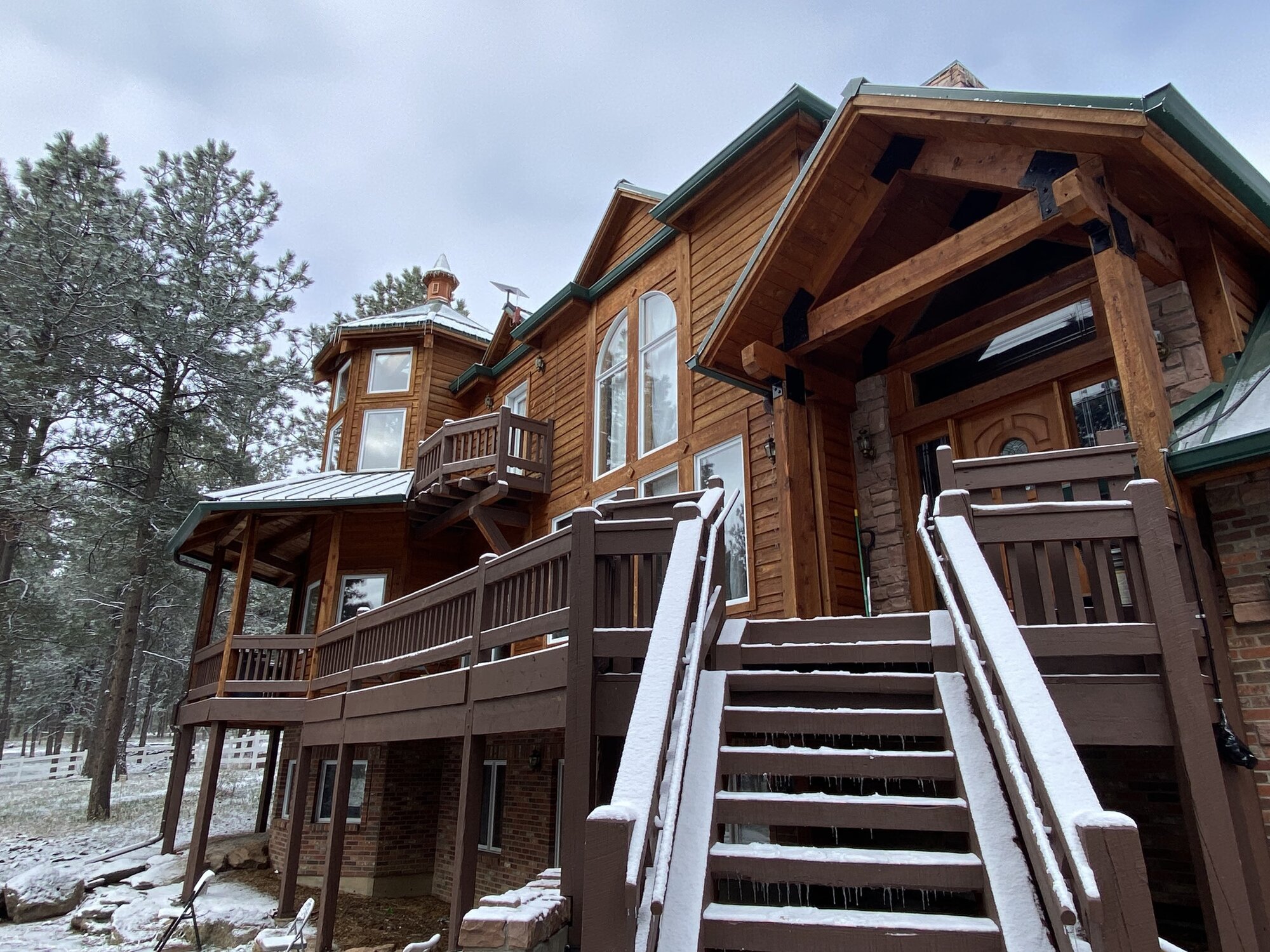
ELBERT, Colo. — Dhamma Sela, a silent meditation center situated in rural Elbert County, is expanding its space as Vipassana meditation grows in popularity.
“Demand for Vipassana courses in Colorado consistently exceeds available capacity, with long waitlists each year,” according to the Rocky Mountain Vipassana Association’s website.
Vipassana is an ancient meditation practice traditionally associated with Siddhartha Gautama, the Buddha, who many believe taught it more than 2,500 years ago. The practice is a form of mindfulness meditation whose name means "to see things as they really are."
Today, Vipassana is practiced in several Buddhist traditions. One widely practiced form, first taught by the late S. N. Goenka, is offered through a worldwide network of centers that follow his teaching tradition. Coordinated by Dhamma.org and organized locally, centers like Dhamma Sela offer a secular 10-day residential course that calls for complete silence and an intensive schedule of meditation. The course is free of charge and supported by donations.
“I went to Lava Hot Springs in Idaho because they had a big waitlist at the Colorado one,” Taleia Casey, who did the Vipassana course in 2023, said. “It was very small when I was trying to go there and that's why the waitlist was so big. All of the housing wasn't even set up or anything yet.”
Dhamma Sela is growing from its current capacity of 15 students to accommodate up to 80 students by 2028. The first phase of its development includes a new multi-purpose building and two residential buildings, with the land already cleared and basic infrastructure in place.
The second phase, which the center plans to undergo after the first phase is complete and has no set time for completion, will include the construction of a dedicated Dhamma Hall and the use of the multi-purpose building as a kitchen and dining facility. Former Vipassana students are funding the development, with additional grants from the Vipassana Community Foundation.
Students stay on site and receive two vegetarian meals a day throughout the course. When students check in, they hand over their phones, watches, books and anything else that could distract them. Reading and writing aren’t allowed, and teachers ask students to put aside religious objects and practices.
“We would wake up at 4:30 a.m. and then we had meditation at 5 a.m. Then you have breakfast and some downtime and again you meditate throughout the day with lunch and teatime in between,” Casey said. “It was about 10 hours of meditation throughout the day. No talking, just staying silent, not even reading. So that was pretty difficult, just having to be able to be bored and sit with yourself and with your thoughts.”
Casey went to the retreat after a long-term relationship with her partner ended.
“I kind of put my whole self into that relationship, so for me, going to [Vipassana] made me able to really sit with myself and realize I didn't have to have that,” she said. “It wasn't as crucial or detrimental as my brain was making it think. I lost that relationship and it wasn't going to be the end of the world.”
Casey doesn’t think of the course as a replacement for talk therapy; in her experience, both have different benefits. The center said the practice is not preferable for people with serious psychiatric disorders and that it is not a substitute for medical or psychiatric treatment.
Tony Liu experienced her Vipassana retreat in Colorado in the summer of 2024. She said the environment felt very peaceful and serene. She stayed in a canvas tent which included a mattress. Others can opt to stay in dorm-style rooms.
Liu worried that she might feel bored and wasn’t sure whether she would have any profound experiences.
“The rigorous schedule was most challenging,” Liu said. “One of the days, I had a moment of feeling all the ‘kalapas,’ or energy particles, vibrating in my body. The felt sensation that we are mostly empty space. This stayed with me … that life is quite mysterious, we don't know how it all works and that energy can mingle … we are all interconnected. Maybe our external is all just our internal pushed out?”
Since she completed the course, Liu said it's brought her “more peace, trust and surrender.” She still medidates daily, she added, which is recommended during the retreat.
There are Vipassana centers in 14 states across the country. Each center follows the same rules and processes. Douglas Garland traveled from San Antonio, Texas to Dallas with his son in February to do the course together.
“It was tough to stay quiet for days,” Garland said. “The beautiful thing about this retreat is that you shut off all your senses so your mind isn't getting clouded. Your unconscious has time to settle. You just focus on thinking about the sensation of your skin as you move from head to toe and back up, you're trying to notice what is happening, whether it's a flint or a twitch or an itch or flutter of the muscle.”
By the end of the tenth day, it felt amazing, Garland said. Garland continues to meditate daily, he said, and he feels much calmer now.
“To me that’s brilliant, that I would have a kind of control to stay calm in the face of issues in life,” he said. “When you start to feel the trigger, because of the meditation, it just sort of melts it away.”
Based on facts, either observed and verified firsthand by the reporter, or reported and verified from knowledgeable sources. To read more about why you can trust the journalism of Rocky Mountain PBS, please visit our editorial standards and practices page.