
Pati Jinich on Colorado, the borderlands and the ‘golden age of Mexican food’
share
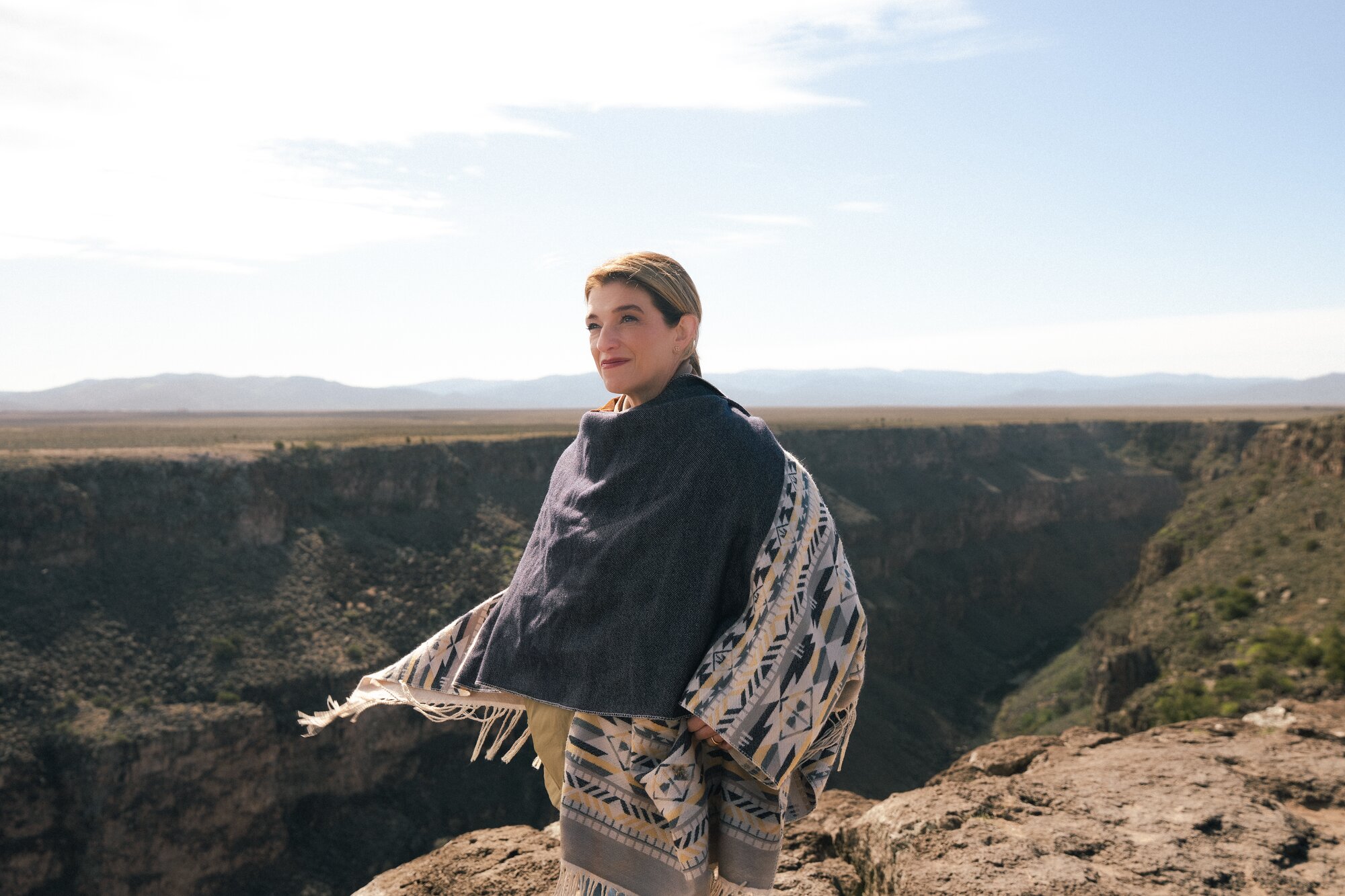
DENVER — Pati Jinich is having a busy autumn.
The James Beard Award-winning chef and host of the long-running show “Pati’s Mexican Table” is celebrating season two of her PBS show, “Pati Jinich Explores PanAmericana.” Season one saw Jinich explore the culture and cuisine of Alaska and Canada. In season two, she travels through the American West: Montana, Wyoming, Colorado, New Mexico and Arizona.
Jinich also published “Foods of La Frontera: Recipes and New Taste Frontiers from Both Sides of the Border” earlier this month. It is her fourth cookbook and it follows her award-winning PBS series, “La Frontera.”
Jinich will be at Asterisk in Denver Oct. 6 for “Cooking Up Conversations with Pati Jinich,” which includes an advanced screening of season two of “PanAmericana.” Jinich filmed in Denver, Breckenridge and Alamosa for the episode featuring Colorado. Rocky Mountain PBS interviewed Jinich ahead of the Denver event. Our discussion covered the “borderless nature of Mexican cuisine and culture,” a recap of her trip to Colorado and whether she agrees with The New York Times that we’re in the “golden age” of Mexican food.
This conversation has been edited for length and clarity.
Rocky Mountain PBS: I’m excited to speak with you, Pati. My wife and I have made your nachos recipe from The New York Times Cooking app more times than I care to admit.
Pati Jinich: Amazing! Oh, I love that one. The bricklayer one? Or the vegetarian one?
RMPBS: Yes, vegetarian, the one with all the beans.
PJ: Oh, I love! Awesome.
RMPBS: I wanted to start there, though, because you had written in an article for The New York Times about the history of nachos that “nachos are the epitome of comida fronteriza, food from the borderlands.” Those foods are central to your new cookbook.
PJ: It is. I think when I started Pati's Mexican Table, Kyle, I really wanted to do Mexican food right. And I wanted to do it authentically, and I wanted to represent where I came from. And I felt this heavy duty, this heavy burden and responsibility. And after so many seasons of going back and forth, I realized that there are many Mexicos, right? There are many Mexican regional cuisines that even us Mexicans don't know. The different regions don't really know or understand each other and even more so when it comes to the borderless nature of Mexican cuisine and culture.
And I think people are afraid of that borderless thing because then you can't put it in a box or a label, and that's where you have Tex-Mex and you have Cal-Mex and you have Northern Mexican, and you have, you know, the 31 million people that live in the U.S. and Mexico borderlands and what they eat and what is authentic to them.
And you know, who is to judge? So with this book, it was very liberating, because I stopped trying to do Mexico “right,” even though I love what I've done with the Mexican regions. But now I'm just embracing the Mexican food and culture and people as I'm finding them. And it's beautiful and it's delicious and it's unapologetically scrumptious.
The food of the U.S.-Mexico borderlands is food that people have a hard time understanding. Is it Mexican? Is it American? Nobody wants to say, “Oh, it's ours,” but everybody wants to eat it.
RMPBS: This is a big fall for you because you also have season two of “PanAmericana” coming out. In the first season you traveled throughout Alaska and Canada, and now you are traveling throughout the American West. Obviously those are hugely different geographic regions, but I'm wondering if you had any similar takeaways this season as you did with the first season?
PJ: I mean, first of all, the proof that Mexican food is borderless: wherever I go, there's a burrito stop, there's a taco stop. And not only that, like, the more hardcore foods like birria, pozole, menudo — which is intestine soup — you know, tongue tacos. It’s all over the place, like from Montana to Arizona. Of course, Arizona is no surprise, but like Montana and Wyoming — I asked, I was with the folks … in Missoula and I'm like, “What's your favorite thing, what should we order for lunch?” And they’re like, “Burritos!” And so we went to a burrito place and at first I was taken aback because one of their most popular burritos is a souvlaki burrito. And I was like, wait, that may be too much for me to digest. But then I ate it and it was delicious, you know?
You know, when I was at the top of Alaska, the first thing I ate was a burrito, and it was very central Mexico with chicken tinga and beans. So I would say the common denominator in terms of food is that wherever I go, I find Mexican [food]. And Mexicans! Which is a lot of fun.
I'm learning so much that I didn't know about the U.S. You know, as a Mexican, I started my career wanting to share my Mexican food thinking that, “Oh, the U.S. doesn't know a lot about our mother cuisine.” And then I realized, “Well, us Mexicans don't even know a lot about our own mother cuisine.”
Then, I realized that I had very strong myths and stereotypes and preconceptions about what the U.S. food was and I was so wrong. And I'm learning so much.
RMPBS: I was wondering if you could tell me a little bit more about your time that you spent in Colorado.
PJ: I mean, the beers from [Colorado Farm Brewery in Alamosa] are just exquisite and full of flavor, with so many different varieties. And there I had the hot dogs, the sausages from Gosar Sausages where he shared two different kinds of sausages. One is a sausage from his heritage. He is from the Ukraine. And that was a delicious sausage he served with the spicy mustard. But then he has the green chile pork sausage. That's like his homage to his family's new home, which is Colorado. And I learned a lot about the chile verde from Colorado that’s different from New Mexico. And I learned about the rivalry. So I had incredible sausages.
So that was in Alamosa and then in Denver, we had incredible food at Welton Street Cafe. We had fried catfish. We had pates, which I had never tried. Which were so delicious. There were some things that didn't make it into the episode, which was such a bummer because we only had an hour. But when we went to the fire station, the guys from the fire station were making a meal and we captured all of it. They were making burgers and they were making tater tots, but we just couldn't fit it into the episode. But I had great food.
And then at Nocturne, I had really delicious, super elevated comfort food that was so good too.
RMPBS: And then did you go to Breckenridge as well?
PJ: Oh, yes. I went to Breckenridge and there I had a mind-blowing pasta from a restaurant that's called Forage.
RMPBS: Well, I won't make you pick between the Colorado green chile and the New Mexico green chile. You can’t alienate your fans.
PJ: No, don't. [Laughs.] But I do have to say I'm obsessed with Gosar’s green chile sausage to the point that I'm putting in an order every month.
RMPBS: I saw last month that The New York Times had an article saying that we're in the golden age of Mexican food. And I was wondering if you agreed with that.
PJ: Yeah, absolutely! I think we're in the golden age of Mexican food. I think it's going to last a long time because we're just getting started.
And I have to say, the American appetite and openness for anything Mexican is so amazing right now. So we have like, not only the incredible food, but the abundance of ingredients that you can now access. Because when I first moved to the U.S., you could find a jalapeño if you were lucky. Now you can find all the fresh chilies, all the dried chilies, and of course all that offer has to do with the demand. People don't only want to go out for tacos for taco night. People want to cook Mexican food at home. So I think between what's being offered, what the demand is and the travel to Mexico — like people in the U.S. are going to Mexico so much, Mexico City in particular, that people know and expect to get that same level of quality.
So I think, yeah, we're just getting started.
RMPBS: You touched on this a little bit — obviously you've been doing this for a while, and I'm curious how the public perception of Mexican cooking has changed over the last few decades.
PJ: Oh, immensely. When I first started Pati's Mexican Table, my first episode was quesadillas. I was very afraid of doing a pozole or a menudo. Fifteen seasons in, I'm doing cabrito, I'm doing menudo, I'm doing birria — I can't keep up! People are so ready. And it's also changed in that I don't feel like I have to explain as much. People are very familiar with the concepts, with ingredients, with the flavors.
It was Mexican 101 20 years ago, where now it’s like we’ve graduated Duolingo and you need to change to a different kind of class.
RMPBS: Is there anything I didn't ask that you think I should know about either your cookbook or season two of the show or anything else you're working on?
PJ: Everything that's happening in regards to my content this fall falls in the borderlands: Pati's Mexican table season 15 is Coahuila, which used to be part of Texas; the book is “Foods of La Frontera;” and then “PanAmericana” crosses the American West and ends in Arizona.
One thing that I was so surprised to find out was that the Rio Bravo, or the Rio Grande, starts in Colorado. For Mexicans, the Rio Bravo — the Rio Grande — there's a huge deal. And knowing that that's where the border was earlier on is just … I guess it gives you some perspective how borders are what they are at a certain time. But how culture and people and food are just flowing.
RMPBS: You do bring up an interesting point. You're focusing your shows and your cookbooks on the borderlands right now at a time when there's a lot of political arguments and vitriol about that region. And so I guess I'm just wondering how you think about that, how you think about your role and whether your work exists as part of those conversations or not.
PJ: Yeah. I think I'm super motivated. I think that food is the most noble space from where to connect and have a conversation and understanding. And I think that we're being forced to choose boxes and labels and identities. And if there's something that I've learned from the U.S.-Mexico borderlands and from being a Jewish Mexican immigrant to the U.S. — all those kaleidoscopes of identities — is that we're lacking nuance. I want to invite people to embrace their inner kaleidoscopes or bridges.
All of this doesn't give me pause. It gives me more battery. Because I feel like we need to embrace nuance more.
Type of story: Q&A
An interview to provide a single perspective, edited for clarity and obvious falsehoods. To read more about why you can trust the journalism of Rocky Mountain PBS, please visit our editorial standards and practices page.
An interview to provide a single perspective, edited for clarity and obvious falsehoods. To read more about why you can trust the journalism of Rocky Mountain PBS, please visit our editorial standards and practices page.