
Denver’s first dementia-friendly choir builds community
share
DENVER — Carmen Cavoto is a lifelong singer.
She just wrapped up her first performance with Second Verse Choir, glowing in a bright red dress outside a hotel ballroom in downtown Denver’s Hilton. While the show was a success, she reflected on a recent “bad brain day” leading up to the show. Diagnosed with mild cognitive decline four years ago, Cavoto came into a recent choir rehearsal crying due to daily challenges she now faces. The staff, volunteers, and other singers didn’t hesitate to show their support.
“They just took me in and held me and gave me some love,” Cavoto said. “Just what I needed.”
Second Verse is less than a year old and focuses on creating accessible music opportunities for people experiencing cognitive decline.
Opening their program with “Under the Boardwalk” by The Drifters, Second Verse brought joyful noise to an awards luncheon during national nonprofit AgingIn’s annual conference.
“It's socialization, which is medicine for us. And it's brain exercise, which is medicine for us,” Cavoto said.
The 22-member choir, founded in January by Kris Boggs and Anne Rigley, welcomes participants with or without cognitive decline diagnoses. Second Verse moves into its third 15-week session this fall, which concludes with a concert in the winter. Boggs knew it might be a stretch to get everyone together for the conference performance. Her suspicions were quickly proven wrong.
“Everyone said yes,” Boggs said, laughing outside the ballroom post-concert. “Performers love performing.”
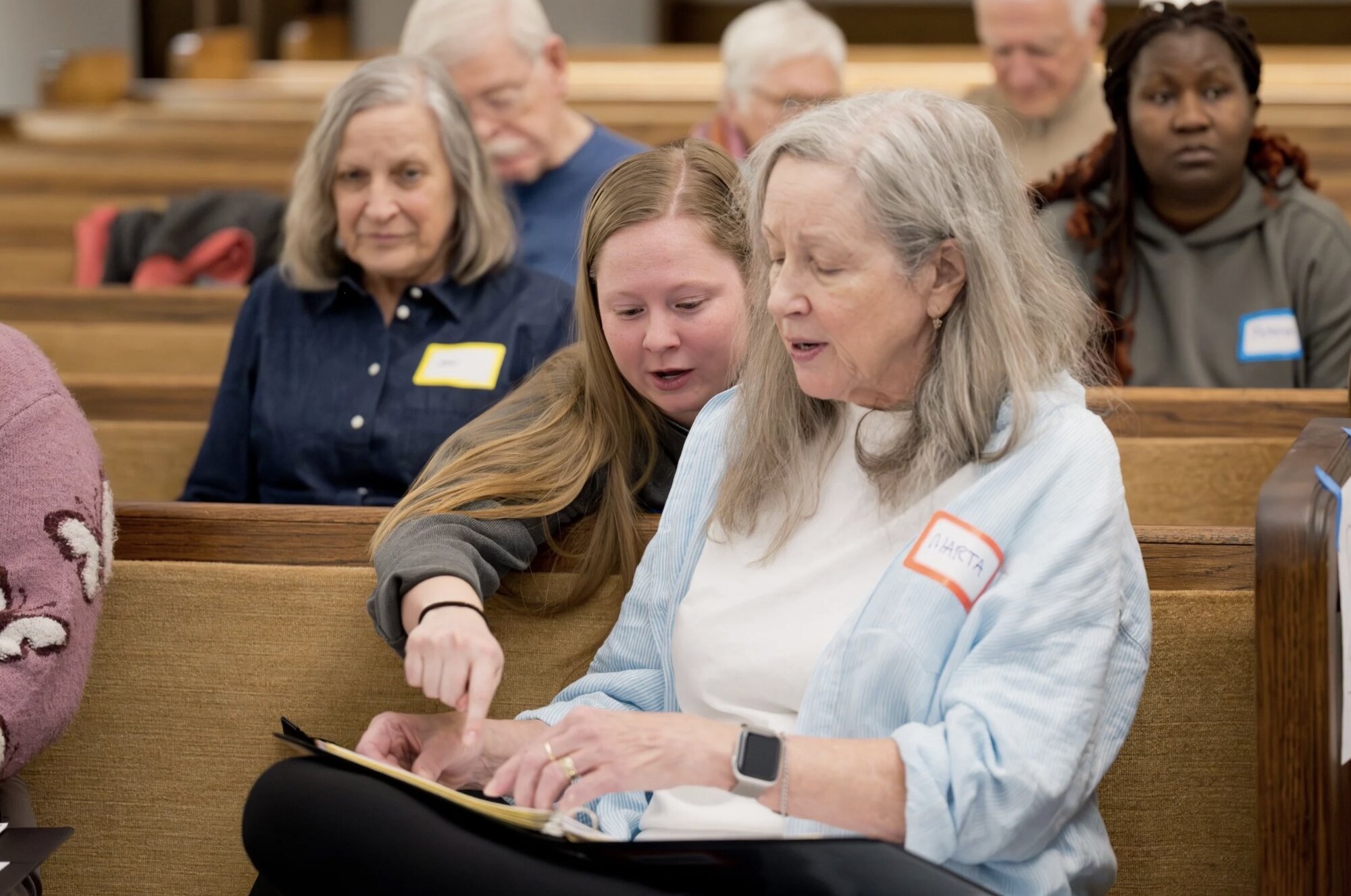
Second Verse is Denver’s first dementia-friendly choir and meets weekly for rehearsals. Participants pay $150 for a 15-week session and are encouraged to bring a family member, spouse, or caregiver to rehearsals for additional support. Boggs helps members like Cavoto feel comfortable at rehearsal, providing accommodations like large print sheet music and extra snack breaks.
“We have homemade cookies at every rehearsal,” Boggs said, smiling and acknowledging this reporter’s envy of that situation.
Second Verse’s philosophy is built off longstanding research around music therapy for Alzheimer's and other forms of cognitive decline. Music therapy and education is proven to improve quality of life and lessen symptoms of cognitive decline.
“We have a participant who will be joining us for another session in the fall,” Boggs said. “One of the things that person’s speech language therapist said to us was his time in the choir is the most he has spoken in years.”
Boggs hears stories from former musicians in cognitive decline, wishing they could participate again. Cavoto reflected on trying out other traditional ensembles, but quickly feeling overwhelmed with the pace and instructions. Once cognitive decline sets in, Boggs said, seniors can have a harder time keeping up with groups.
“I’ve talked to people who have been asked to leave their choirs and orchestras once they started experiencing cognitive decline,” Boggs said.
Boggs has 40 years of experience in the aging field and works as program manager at Second Verse, onboarding new members and answering questions from families and caregivers. One of the biggest questions Boggs fields is whether or not the singer will have to explain their diagnosis. That’s a firm no.
“We want people to just be able to come and sing,” Boggs said.” “If someone comes and says, hey, I'm having a bad day, I'm having a hard day,’ we say ‘all right, what do you need today?’”
Each session ends with a performance, a crucial part of the experience according to Boggs. As a musician herself, she believes working toward a show builds accountability and allows them to feel strong. Being held accountable to a deadline is “a whole different thing” than just getting together and singing.
“It lets them show off what we've done and allows them to be seen,” Boggs said. “The aging community doesn’t have a lot of opportunities to be onstage.”
Cavoto’s diagnosis devastated her. She recalled the “series of losses” that quickly followed. Second Verse became an outlet to friendship and music, two things she said felt distant at the time of her diagnosis. She’ll be singing a solo at the choir’s next performance, she said, happy tears falling from her eyes.
The group currently rehearses in the Cherry Creek Central Christian Church, a central location for the mostly Denver-based group. Boggs’ hope to start other choirs across the region so members who live further away don’t have to drive 30 to 40 minutes for rehearsal.
“Transportation is absolutely an issue for people,” Boggs said. “I do have the dream of having a Partridge Family bus so I can just pick everyone up.”
Transportation was top of mind at the state of the city earlier this summer, where Mayor Mike Johnson unveiled his Mile High Line project, focusing on making Denver more accessible via public transportation. Within the aging population, initiatives like senior home repair and the Colorado Senior Games aim to bring resources to a community oftentimes overlooked. She warns of the "silver tsunami," which refers to the 73 million baby boomers who will make up the majority of our aging population in the coming years. Experts warn that the financial burden of this many people in need of aging support could significantly impact the U.S. economy.
“A huge portion of the population is getting older all at once,” Boggs said. “I think there is more awareness, and we're demanding more awareness, and we're doing more public education.”
The nonprofit is currently surviving on volunteers. During January’s inaugural session, Second Verse started with one member. Eight months and 21 other members later, Second Verse hopes to continue its work with the dementia community. Boggs credits Minnesota’s Giving Voice Network as a role model and blueprint for this type of organization. Giving Voice has inspired groups like Second Verse all over the world, including fellow Colorado organization Lifesong Chorus in Lafayette.
“Having programs like this is so important because music is the universal language,” Boggs said. “If I need to build a connection with someone, I can always start a conversation about music.”
“Dementia” isn’t a word that people want to say, according to Cavoto, even among those who have it. Through Second Verse, she’s more open with people now and her friends in the group talk about their struggles. This, on top of rediscovering her love of stage and song.
“I can still sound good,” Cavoto said, red lipstick curling into a smile. “I hate to say that, you know, as this sounds like an ego, but, you know, singers have egos.”
Second Verse is currently accepting volunteer applications, and those interested in the choir can get more information here.
Type of story: News
Based on facts, either observed and verified firsthand by the reporter, or reported and verified from knowledgeable sources. To read more about why you can trust the journalism of Rocky Mountain PBS, please visit our editorial standards and practices page.
Based on facts, either observed and verified firsthand by the reporter, or reported and verified from knowledgeable sources. To read more about why you can trust the journalism of Rocky Mountain PBS, please visit our editorial standards and practices page.