
Moose are native to Colorado, according to new CU Boulder study
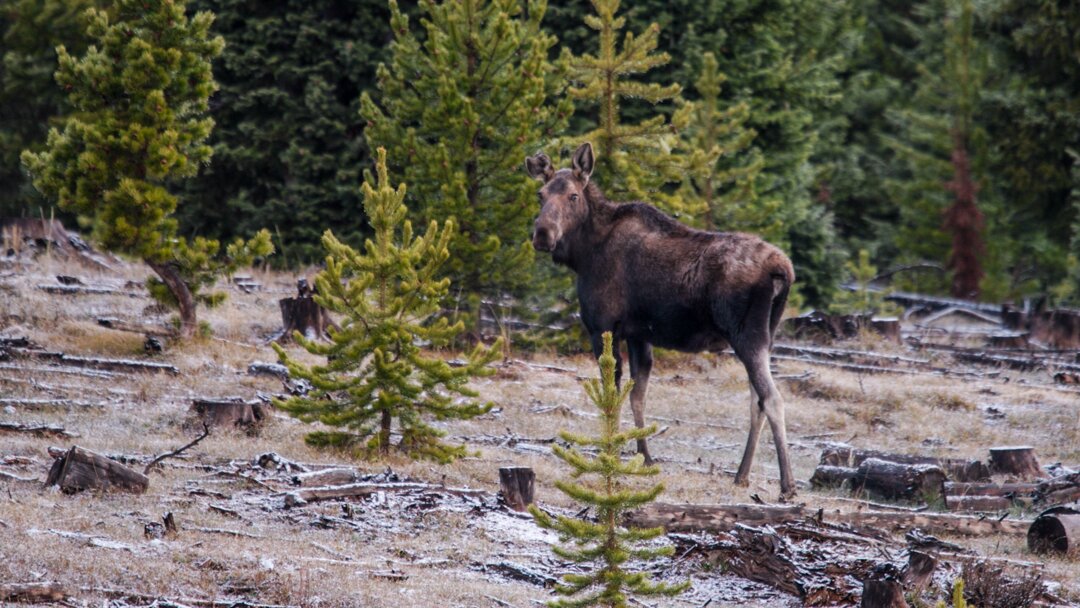
DENVER — You may have heard recent debates over moose and their history in Colorado. According to a new study from CU Boulder, the continent’s second-largest mammal is native to Colorado.
Moose sightings were rare in the state before the Colorado Division of Wildlife transplanted the species in 1978. Now, Colorado's booming moose population is raising questions on whether or not the species is native to the region.
In Rocky Mountain National Park, the species’ rapid growth and appetite has contributed to the degradation of the park’s wetlands. Reports of moose encounters have increased over recent years, including a woman who was trampled by a moose in Nederland and increased sightings on local trails and parks.
William Taylor, assistant professor and curator of archeology at the University of Colorado Museum of Natural History, authored the recent study. Taylor had concerns with labeling moose as invasive because that distinction opens the door for more extreme population management methods. He pursued the study to add more context to the conversation about how to handle the growing moose population.
“When a term like [invasive] gets brought into the equation, I think it’s extremely important that there be a kind of reckoning with the deep history,” Taylor said in an interview with Rocky Mountain PBS.
Taylor and his team at CU Boulder examined written historic records like newspapers and journals, as well as thousands-of-years-old moose bones found in the state. His research focuses on the relationship between humans and animals, specifically focusing on Colorado's native horses.
Taylor and his team worked on the moose study for several years prior to publishing, and he knows there are still many questions to be answered; for example, he cites the changing climate and how moose are adapting to that change.
“We need to be curious about what those changes are, how many patterns or changes like this happened in the past, and what can we learn from the archeological record,” Taylor said. “To be frank with you, it's going to take us years to sort all that out.”
Kyle Patterson, management specialist and public affairs officer with Rocky Mountain National Park, said the park’s own research differs from the study’s findings.
"National Park research indicates there was not a breeding population of moose in Colorado. Their historic population was very rare,” Patterson said.
More than 3,000 moose live in the state’s mountainous areas with nearly 250 present in Rocky Mountain National Park alone. Taylor hopes the data found in this study helps decision-makers create effective and accurate management plans for moose on public and private lands.
Hear from Taylor and other moose experts in “Managing Moose,” a new Rocky Mountain PBS original documentary premiering Sept. 17.
This story was updated to include a quote from an official with Rocky Mountain National Park.
Based on facts, either observed and verified firsthand by the reporter, or reported and verified from knowledgeable sources. To read more about why you can trust the journalism of Rocky Mountain PBS, please visit our editorial standards and practices page.