
Land use approved for largest solar farm in the state
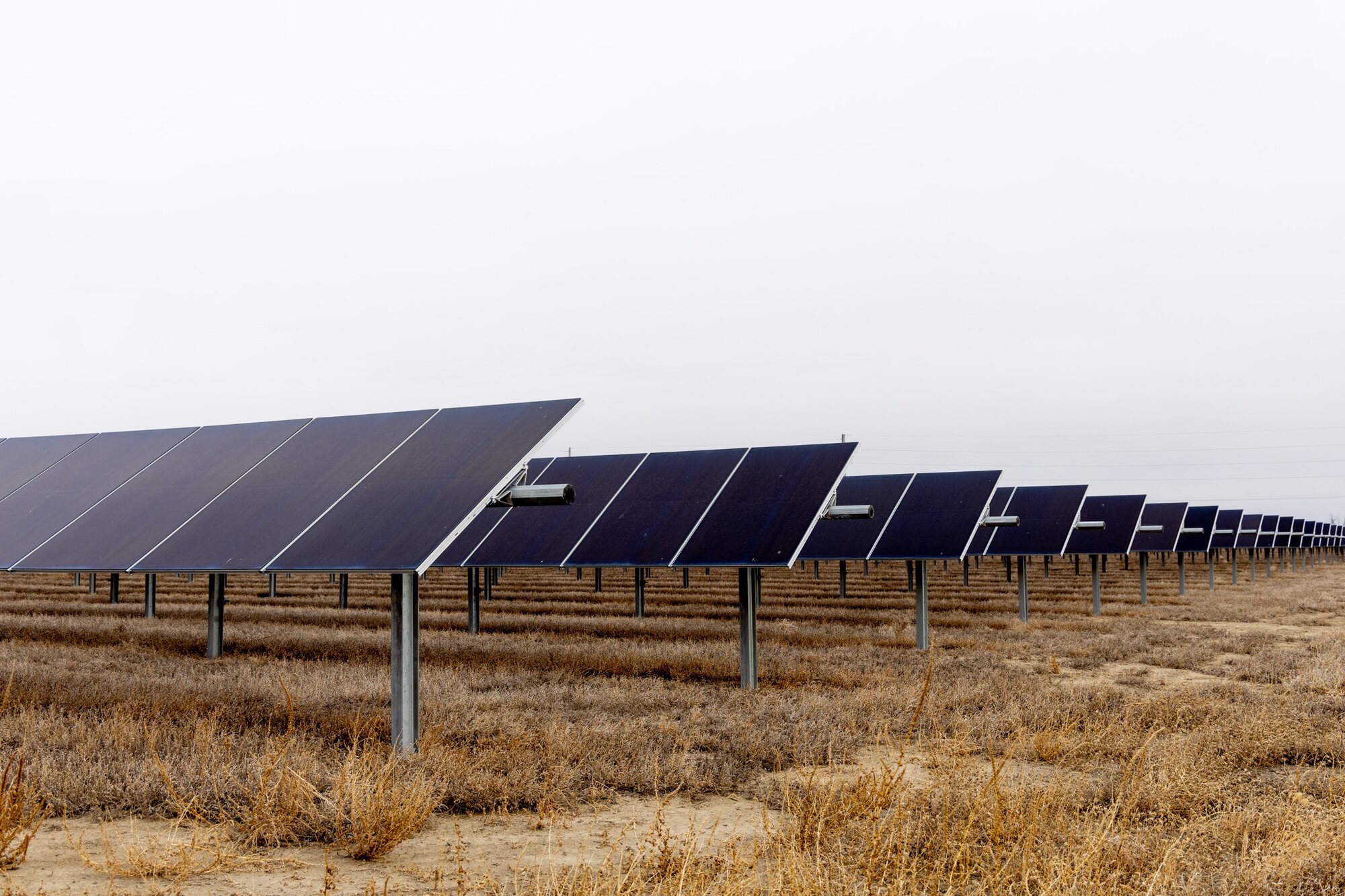
WATKINS, Colo. — One of Colorado’s largest solar farms is coming to Adams County.
On Oct. 13, the county’s board of commissioners approved 2,800 acres in Watkins for the project, allowing Lightsource bp, a leading solar developer owned by British oil and gas giant BP, to use the land for the solar facility for the next 40 years.
The $675 million project, named Big Bronco Solar and Storage, will sit just east of Denver International Airport. It will include an 1,800-acre solar farm, a utility substation, a transmission line and a battery storage system.
“Power from this project can easily flow into Denver, where most of Xcel's load is, without the need for Xcel to build costly new transmission or make costly transmission upgrades,” said Will Vaughan, a development manager for Renewables at Lightsource bp. “So this contributes to keeping everybody’s power prices lower.”
The solar farm is expected to generate 300 megawatts of electricity — enough to power about 99,000 homes, according to the company. The battery system will store excess energy for later use and can deliver up to 300 megawatts of power.
A 2026 report released by Lazard finds that renewables remain the cheapest sources of new power generation, even without subsidies. Due to their relatively low costs and shorter construction times than natural gas, nuclear and coal plants, wind, solar and battery storage are expected to account for most new U.S. power sources in the coming years.
Colorado reflects this national trend. In 2025, wind, solar and geothermal sources supplied about 44% of the state’s electricity. By 2030, Colorado aims to increase that share to more than 80%.
Despite the Trump administration’s efforts to restrict the growth of renewable energy, the U.S. clean energy sector continues to boom. In 2025, wind and solar generated a record 17% of U.S. electricity. Wind power generation rose 3% from the previous year, while utility scale solar generation jumped 34%.
Some of the largest renewable energy projects, particularly wind, are concentrated in Colorado’s eastern plains. Kit Carson is home to eight wind farms and is becoming a giant hub for green energy, with two new projects under construction and a few more planned. The county generates 3.3 terawatt-hours (TWh) of electricity annually from wind power.
Other wind projects in the eastern plains include Limon Wind Energy Center, a 600-megawatt wind farm in Limon that stretches across 104,000 acres and came online in 2014. It can power about 114,000 homes. The Niyol Wind Energy Center in Logan County is a 200-megawatt wind farm that came online in 2021 and generates enough electricity to power approximately 60,000 homes.
Solar energy is also expanding across the region, with solar farms in Logan and Weld counties. Pueblo County in southern Colorado is a major solar hub, accounting for nearly half of the state’s solar farm acreage as of 2024.
Since 2010, the state has more than tripled renewable energy generation driven by the growth of wind farms on the Eastern Plains and solar installations across the state. Colorado became the fourth state to legalize small, plug-in solar systems, allowing residents to install up to four solar panels on balconies, patios and yards. The law takes effect Jan. 1, 2027.
The proposed Big Bronco Solar and Storage project would add to the state’s solar capacity. According to Lightsource bp, the project is expected to generate about $40 million in property tax revenue for Adams County special districts over its lifespan and employ up to 400 workers during peak construction, with many hired locally.
There was no local opposition to the project during public hearings.
Dennis Davis, who manages Davis Farm LLC, a 320-acre dryland farm north of the proposed site that has been in his family for five generations, said he supports the project.
“Farmers out there are at the whim of Mother Nature and Mother Nature’s been getting more and more cruel,” Davis said. “As a neighboring property, I feel it [the solar farm] would be a very positive use for the property.”
Adams County resident Charles Cipriani also voiced support for the project, but recommended a bond related to the decommissioning of the lithium iron phosphate cells of the batteries.
“It is not economically viable to recycle lithium iron phosphate cells and so someone will have to pay for it or it will not be done, so I would highly recommend that you have a bond in place,” Cipriani said at the public hearing. “It is environmentally exhaustive and unsafe to dispose of the batteries without property managing the recycling of them.”
Adams County planners with the community and economic development department said it is something they will follow up on.
A proposed 900-acre solar farm near Mesa Verde National Park is also facing scrutiny over battery storage. Some residents are concerned about the project’s size and the batteries’ proximity to the park and nearby communities, particularly following a January 2025 fire at a battery storage facility in Moss Landing, California. Though not a solar farm, the battery that caught fire stored electricity for later use.
Construction for Big Bronco Solar and Storage is not expected to begin for another two years and the company is still seeking a buyer for the electricity the project would generate.
Site management will also play a role in how the project is developed, the company outlined in their development plan. Because the land was a former dryland farming area, Lightsource bp plans to restore native vegetation, manage erosion and conserve topsoil to protect the site during all project phases.
Lightsource bp operates two other large-scale solar projects in Colorado, both in Pueblo County. The company reports conserving more than 3,000 acres of native shortgrass prairie across the two sites. Bighorn Solar, a 300-megawatt facility, began operating in 2021, followed by the 293-megawatt Sun Mountain Solar facility in 2022.
Currently Lightsource bp has 33 projects operating across 11 states.
Based on facts, either observed and verified firsthand by the reporter, or reported and verified from knowledgeable sources. To read more about why you can trust the journalism of Rocky Mountain PBS, please visit our editorial standards and practices page.