
Beulah residents navigate a ‘quadruple whammy’ of fire and floods
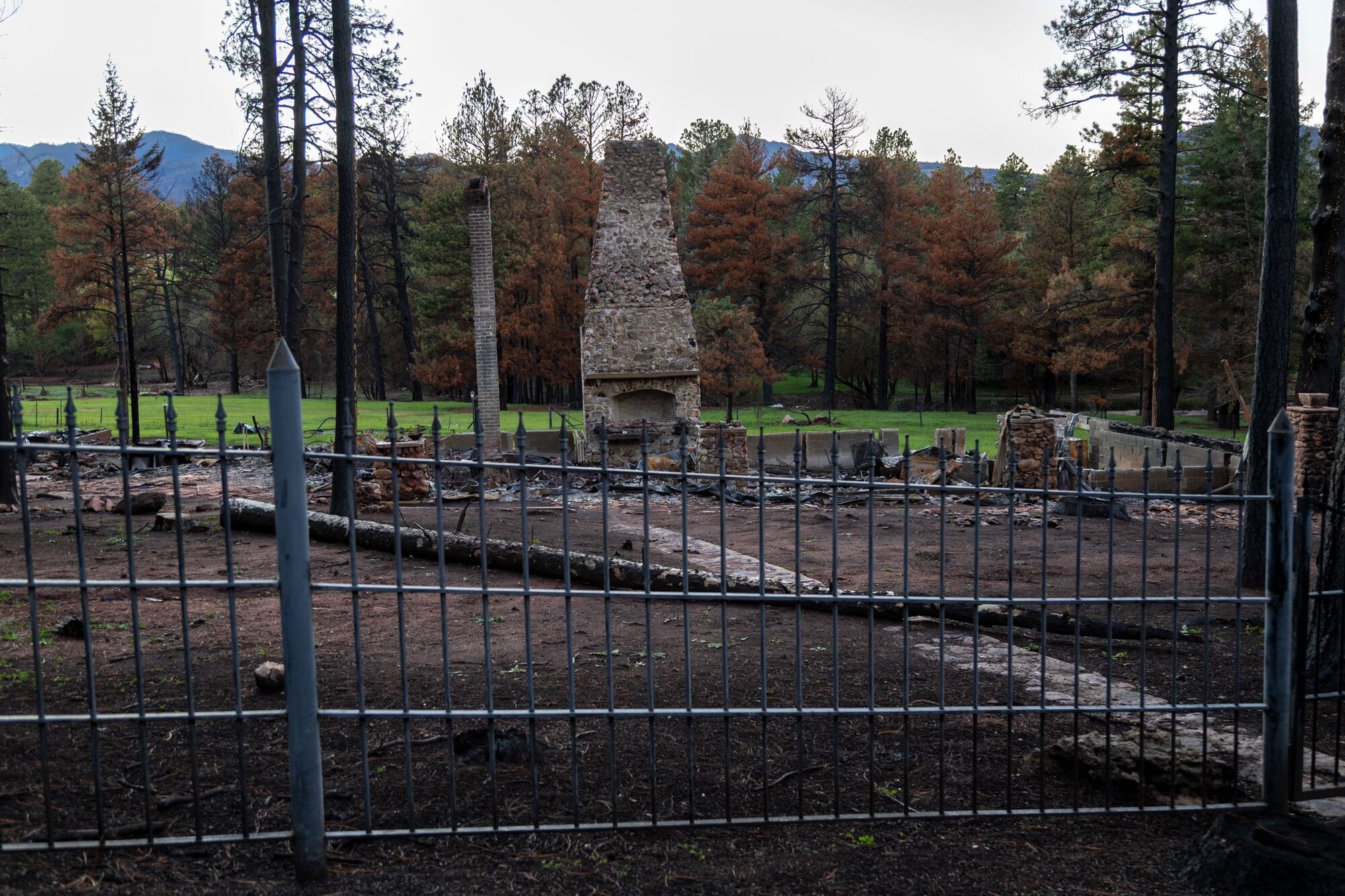
BEULAH, Colo. — Black, scorched trees appear in blotches across the Beulah Valley in southern Colorado after the Aspen Acres fire ripped through the nearly 800-person town this summer. A faint smell of ash and burned ponderosa pine hangs in the air. Chimneys are all that remain of many homes.
After the wildfire came flash floods, which claimed the life of one 80-year-old Beulah man in August.
The Aspen Acres fire, which started June 29, created burn scars on the land and hydrophobic soil — the soil repels water instead of absorbing it. The water-repellant soil is an ideal surface for flash flooding, which has been wreaking havoc on the small town and making it difficult for residents to move forward with their fire recovery efforts.
"It's like a quadruple whammy,” said Linda Overlin, a Beulah resident who is on the agriculture, land reclamation and housing subgroup of the Aspen Acres Recovery Team, a local volunteer group that assists survivors with finding verified help, according to its website.
As residents continue to face post-wildfire obstacles, the Colorado State Forest Service and Colorado State University extension teams are hosting different programs like informational workshops and “field days,” where the two groups bring residents to wildfire-afflicted properties. These programs offer residents best practices on topics like reseeding their lawns, dangerous tree removal and protecting their homes from flood-induced water damage.
The Aspen Acres fire has burned more than 102,000 acres and destroyed over 300 homes as of Oct. 2, making it the seventh largest fire by acreage in Colorado’s recorded history. The fire — which state investigators recently attributed to an aspen tree that fell on a power line — continues to burn and is 82% contained.
Record-low snowpack and dry conditions fueled the fire's explosive growth, according to InciWeb. But now, heavy rain — which once might have reduced the extent of the wildfire’s impacts — is making recovery efforts difficult for Beulah residents.
“When you hear about the fire, you really — you worry about the dry vegetation, the trees, the structures and what all the damage all that fire does,” said John Switzer, 68, a Beulah resident whose property sustained fire and flood damage, although his house survived.
“And flooding is really not on your mind at that point.”
CSFS and CSU extension hosted a meeting Sept. 23 at the Beulah Fire Station to discuss post-wildfire dangers and threats. Grey clouds rolled in and more rain drizzled outside the building as about 40 Beulah residents, most of them older adults and retirees, pulled into the fire station's parking lot and walked inside.
A rectangular table was set up at the workshop’s entrance with free cookies, water bottles and a yellow legal writing pad. Overlin asked folks walking through the door to write down what they know about who lost their houses and who hasn’t returned since evacuating from the fire, along with those contacts’ phone numbers and email addresses.
“People just didn't come back and we don't know where they are,” Overlin said. “So that's been a real issue.”
Many residents who haven’t come back yet are retired and don’t have the energy or capacity to rebuild, she added.
“So we're busy right now trying to compile a list of people who might be staying so we can help them rebuild,” Overlin said.
Overlin — through her participation in the Aspen Acres Recovery Team — connects residents with grant money and different programs, including one where volunteers clean up debris at the sites of lost homes at no cost to residents.
“I have so many meetings every week, and it is tiring and it's daunting,” Overlin, who is in her 70s, said. “But at least I have a house.”
Overlin and her volunteer team also work with the building department to make it easier for people to obtain permits so they can start to rebuild their homes, she added. But rebuilding for Beulah residents is unlikely to happen until next spring, Overlin said, because the permits take time.
Foundations remain at the sites of many homes that burned down, but building inspectors have condemned many of them, Overlin said.
“So they can't even use their old foundations,” she said. Overlin’s good friend Glenda Harlow, a retired school librarian, lost her home in the fire.
“I think I’ve become kind of numb,” Harlow said. “This was our forever home. It was our retirement home.”
Harlow and her husband are still sifting through the rubble where their home used to stand, trying to find melted jewelry or anything else salvageable.
“I can’t think about it. I just have to go do what I need to do and come back,” Harlow said.
Harlow and her husband picked out a new floor plan, but rebuilding won’t happen until next year, she said. Harlow described the process as “emotionally and physically exhausting.” She said she understands why many residents are choosing not to rebuild.
Flooding isn’t as much of a problem for the Harlows. Their main concern is keeping the soil from washing out, Harlow said. Gamble oak — “which I can’t stand," Harlow said, because it overtakes every other plant — is now a welcome friend for their soil retention efforts. They are also working on reseeding their grass.
Prior to the wildfire, Harlow and Overlin met for a book club with a few other residents in town. Since the fire tore through town, residents reinstated the book club, which offers a “safe space where people can talk and unburden themselves if they need to,” Harlow said.
The approximately 20-person group rotates who hosts the meeting at their home. In August, Harlow was supposed to host. She skipped book club that month, but rejoined at the September meeting where they read “Hello Beautiful" by Ann Napolitano.
Extreme flooding is expected to continue for the next few years, which will impact many residents in the valley, Derek Sokoloski, the southeast area manager for the Colorado State Forest Service, said during the meeting.
“It can be really discouraging to think of this happening year after year after year,” Overlin said.
Massive sheet flow — water that spreads over a large area with no defined channel and uniform depth, according to NOAA — is expected in high burn areas, said Annie Overlin, Linda’s daughter and a botanist and soil scientist who is the southern extension specialist at CSU. She also lives in Buelah. While her house survived the fire, it is located near a creek that experienced flooding on July 28 that totaled her Dodge Ram truck.
“It’s important to think about the things that you can do to slow down that flow,” Annie Overlin said.
During a CSFS and CSU extension flood mitigation demonstration at Switzer’s property on Oct. 2, the teams showed residents ways to slow down the flood waters. One example includes placing straw waddles — long, woven sacks filled with hay — in areas where the land dips on the property. The waddles aren’t meant to stop or dam the flow, they said, but it can act as a sort of speed bump to slow the water down.
Other methods include planting willow trees near river banks, which help stabilize water channels, they said.
Floods aren’t the only post-wildfire recovery risk. Residents also need to be wary of scorched trees that are more prone to falling — a threat to people and property, Sokoloski added. Standing dead black trees are more hazardous the longer they stay up, he said, and become more susceptible to wind with time.
“If there is any doubt,” Sokoloski said about scorched trees, “take it out.”
President Trump approved federal assistance in September, but it does not account for individual recovery efforts. Last Friday, Gov. Jared Polis submitted another request from the U.S. Small Business Administration “to help individuals, families, homeowners, renters, and businesses recover from the Aspen Acres and Gold Mountain Fires and burn scar flooding,” according to a press release. The U.S. Small Business Administration approved Polis' request Friday, Oct. 16.
For more information on where to receive help, donate or volunteer, visit the United Way Southern Colorado website.
Based on facts, either observed and verified firsthand by the reporter, or reported and verified from knowledgeable sources. To read more about why you can trust the journalism of Rocky Mountain PBS, please visit our editorial standards and practices page.