
CSU Pueblo child care center that served generations of families closes
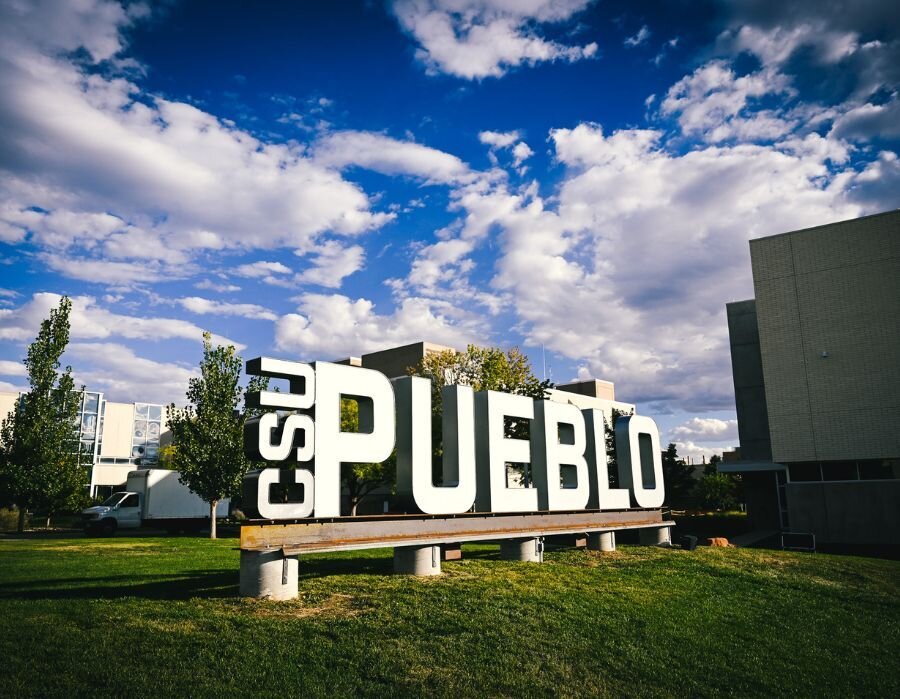
PUEBLO, Colo. — For the first time in decades, the Colorado State University-Pueblo child care center is quiet. Owners Rita Samora and Marciela Palma spent this week taking down bulletin boards, packing away toys and boxing up equipment before closing the center's doors.
“I was shocked when they said they are not renewing our contract,” Samora, who has owned and operated the center with Palma since 2014, said. “We argued, ‘Well, what about our 24 years of service here with the community that we have made here at the center?’”
Early Childhood Education Management Systems, known as ECEMS, had provided subsidized on-campus child care for university students and faculty for more than 20 years. Its contract with the university ended June 30, and services stopped July 1. Staff who worked in the center have been laid off.
The center may reopen next year with new owners, but no earlier than Jan. 1, 2027. Now that the center is vacant, the university is "assessing what modifications might be necessary to continue operating a childcare center in an efficient and sustainable manner," CSU Pueblo President Rhonda Epper wrote in an email to university staff and students.
Samora and Palma took ownership of ECEMS after years of working at the on-campus child care center as staffers. ECEMS’ previous owner, Jiana Rosso, transitioned the facility to Samora and Palma.
Three months ago, Samora and Palma met with two CSU Pueblo Auxiliary Services employees and learned that the university would not renew ECEMS’ contract. Samora said she had to step away from the meeting so she could process the news and returned to ask why — something she said she still doesn’t understand.
The decision also came as a shock to parents whose children attend the center. They protested, sent emails to the university, asking how they could help keep ECEMS on campus. Parents spoke during a CSU Pueblo Board of Governors meeting, raising concerns about future access to affordable child care.
“They're just such amazing people and they run just such an enriching program,” said Serena Cruz-Diska, whose daughter was in ECEMS’ preschool and daycare last year. “I myself am an educator and I've done early childhood education in the past. It's really hard work.”
“I think it's devastating to uproot something that was so good for the community,” she added.
Cruz-Diska’s daughter, who was 4 years old at the time, had attended another child care facility, but Diska decided to move her to ECEMS after loving what she saw during her tour of the center.
“When you have people come back because of your reputation … because of how you took care of them and how you will take care of their children. That's the community aspect of it,” Samora said in tears. “Some families have been with us for four, five years. It’s been hard for them because they have regarded us as extended families.”
Colorado’s child care shortage is squeezing families. None of the state’s 10 most populous counties have enough licensed child care slots for children under age 6, and Pueblo has the fewest, according to the Common Sense Institute. The cost also adds pressure. While affordable child care is considered no more than 7% of household income, Pueblo families spend an average of 18.6% of their household income on child care.
Licensed to care for up to 62 children, ECEMS served toddlers through preschoolers with a staff of 10 to 12 employees. The center gave enrollment priority to CSU Pueblo students and faculty and offered them subsidized tuition rates. According to the university, six students uses the child care center.
For 24 years, ECEMS operated under a five-year contract which the university had renewed each cycle. The center is one of only two child care facilities in Southern Colorado to earn a five-star rating through Colorado Shines.
University officials say the child care center has incurred more than $830,000 in operating losses over the past decade, averaging more than $80,000 lost annually. As the institution addresses a structural budget deficit of more than $2 million, officials say they are reviewing expenses and working to make auxiliary services financially sustainable. The university said its subsidy has helped the ECEMS offer lower rates, but the future of the service depends on whether it can operate without university funding.
“I don't understand where they say it's financial and that it's $80,000 loss per year. I don't see that cost figuring out, but I don't know,” Samora said. “We asked for specifics, but our questions were not answered. They could have upped our rent. We could have maybe come to an agreement to help alleviate some of the financial costs because we do know the university is in some financial trouble.”
As for the staff who helped run the ECEMS center, they are looking for new job opportunities. Catalina Espinosa-Mora, who has worked at the center for five years, said she is looking for small gigs at the moment.
“The kids were asking questions, like, ‘Where's all this stuff going?’ And we told them we are taking them to storage,” Espinosa-Mora said. “It was hard to explain to the kids that we are packing up the center.”
She said some parents are desperate for child care, so she will be watching one of the kids two days a week for the next two weeks, while their parents figure out next steps.
“Right now, just helping people stretch it together will help us stretch it together,” she said.
July 3, 2026 correction: A previous version of this story incorrectly said that CSU Pueblo had awarded a new contract to Learning Care Group, a national for-profit child care provider with centers in 40 states. An official with CSU Pueblo said that the university entered negotiation with a new childcare provider, but that the negotiation is not complete, and that the child care center would only reopen after an assessment from the university to determine "what modifications might be necessary."
Based on facts, either observed and verified firsthand by the reporter, or reported and verified from knowledgeable sources. To read more about why you can trust the journalism of Rocky Mountain PBS, please visit our editorial standards and practices page.