
Q&A: Melat Kiros on the ‘affordability crisis’ in her hometown
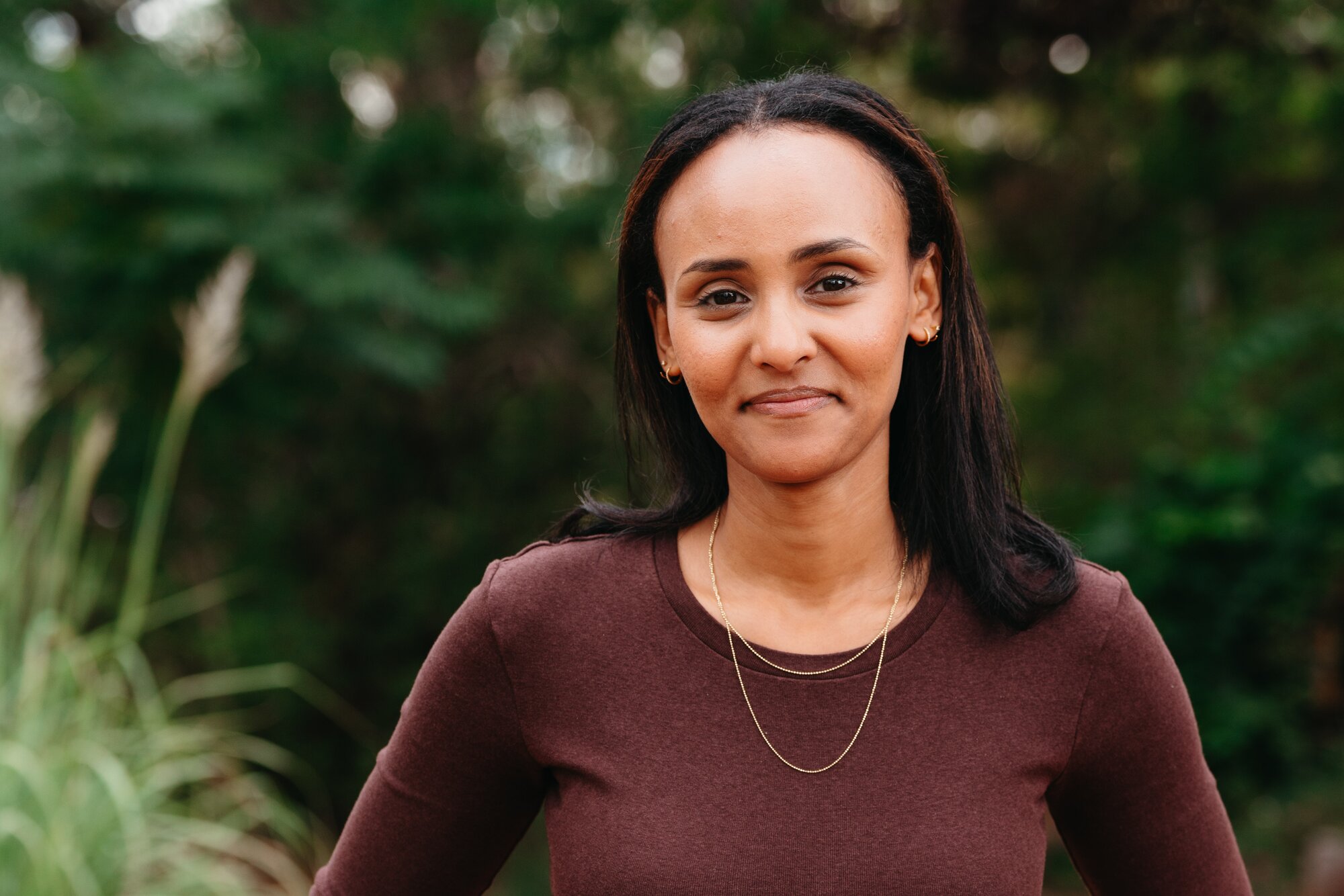
Kiros, a 29-year-old Democratic Socialist, is the Democratic nominee for Colorado’s 1st Congressional District, which includes Denver. She defeated 15-term incumbent Rep. Diana DeGette in the Democratic primary. The district is the most Democratic in the state, meaning Kiros is heavily favored to win in the general election.
Kiros was born in Addis Ababa, Ethiopia, and grew up in Denver. Kiros’ campaign to represent her hometown in Congress has focused on her community’s affordability issues in transit, housing, health care and child care.
A recent poll conducted by the Colorado Health Foundation found that 85% of those surveyed said the rising cost of living in Colorado was either an extremely or very serious problem. More than three-quarters of those surveyed said affordability might call into question whether they can continue to call Colorado home.
Ahead of the midterm elections in November, Rocky Mountain PBS is interviewing community members and leaders across the state to create a picture of how rising prices and costs of living are impacting Coloradans, and what elected officials plan to do about it.
Kiros sat down with Rocky Mountain PBS to discuss affordability as she enters the final stretch before Election Day.
This conversation was edited for length and clarity.
Rocky Mountain PBS: Let's just jump right into it. Affordability was a huge part of your campaign. Talk to me a little bit about your experience living here in Denver.
Melat Kiros: I think my experience is one that is really informed by how I grew up watching my dad and my mom come here with literally nothing to their name and be able to effectively achieve what is known as the American dream, right? They worked multiple jobs that put my dad through pharmacy school and he was able to buy homes and send his daughters to college.
Those opportunities are no longer available to young people, even if they do the right thing and go to college and get a degree. The jobs aren't there as much as they were before, and they're not paying nearly as much as they should be if we kept up with productivity right now. It's just really difficult for people to get by, let alone thrive, which is what the American dream is supposed to be about.
And so, living in this city, one of the most expensive cities in the country, and also having seen the transition from when I was a kid and like how much Denver has changed, a lot of cities are kind of dealing with this reckoning where a lot of the people who make the city what it is and make it run in the way that it does, can't even afford to live here anymore.
And I just don't think our politics are tuned in enough to that crisis, and we need more people who actually have the lived experience with it, who are going to have the level of urgency required to meet this moment.
RMPBS: I see a lot of similarities to Tampa, which is where I’m from. A lot of rapid growth. Do you think that affordability issues are an inevitable part of that?
MK: You know, I think it matters what kind of growth we’re talking about. Growth for the sake of growth isn't always a good thing. The thing that grows exponentially without caution at all is in many other spaces, considered cancerous.
I think we should be focused on a sustainable kind of growth. The kind of growth that keeps in mind the people who are here right now and deserve to be able to live in the cities that they've grown up in and work in to be able to afford and thrive, while also making space for folks to move in as well.
I think the thing that's prevented us from actually addressing the affordability crisis is understanding that growth has really just been a misnomer for this really relentless pursuit of, just profit, and profit that would come at the expense of the working people of this city.
So it's not about being anti-growth for me. It's just about being sustainable and how we grow.
RMPBS: What do you see as the biggest issue related to affordability, specifically here in Denver?
MK: Housing. I mean, it is the foundation upon which everything else rests upon; if we don't have shelter and the security of knowing that there's a safe and warm place for us to sleep in at night. I think it's really important for folks who maybe haven't experienced housing insecurity to take a beat and just think about how would I go about my day if I didn't know that I had a safe place to sleep at night?
The capacity that it robs you of to be productive and to go about any other thing that you might care about is next to impossible. And it's why we are continuing to face this crisis, because we're not actually thinking about the gravity of that which we're facing right now.
RMPBS: Talk to me about plans for housing. Walk me through a little bit of what you're hoping for.
MK: I'm a big proponent of Housing First, which just resets this narrative and makes it clear that we have to just get people housing. That is the number one job that we have. And all other things are tangential to that specific purpose that we have to be focused on.
Once people are in housing, and safe, and sheltered, and warm … then we can talk about what wraparound services need to be available for folks to make sure that they can get back up on their feet so that they can provide that housing for themselves.
Rent stabilization is a huge part of that, as well as making sure that we are not pricing people out of homes that they've already lived in for the purpose of this relentless pursuit of profit. And that's not to say that, you know, you can't profit off of building homes and all the things, right?
But when we're talking about shelter and just making sure our most vulnerable communities have a safe and warm place to sleep in at night, the profit motive should not even be a part of that conversation.
If you want to go and build luxury housing and luxury homes, go for it. Have at it. But at the base level, that's where my concern is. And that profit motive is singularly responsible for preventing us and providing the kind of housing that we need.
RMPBS: I'm assuming profit is your answer as to what is driving up the cost of living in Denver?
MK: You know, I think if you're only concerned about making a profit and there's always going to be, you know, folks that can afford to hit whatever costs you're requiring, and you have a city like Denver that is growing and thriving and becoming more exciting, you are inevitably going to drive out the people who have always lived in this city and can no longer afford those prices, because we are not seeing wages rising.
Making it so that these rent increases aren't necessarily impossible, but are regulated, and that it is happening at a pace that is reasonable for the actual tenant and doesn't inhibit the developer and the building's ability to meet their costs.
It's not a zero sum game. I really, sincerely believe that this is something we can figure out. The problem is that the people that are actually making these decisions really only care about making the profit, and if that's the singular motive. This is the inevitable consequence of it.
RMPBS: You touched on the other part of the equation being that wages haven't really gone up. Where did we go from here?
MK: I think we have to get money out of politics. I think the most frustrating piece about these conversations about affordability, whether we're talking about housing or health care, child care or anything, is that the American people actually already agree — we're all on the same page — that these prices are out of control. And it doesn't make sense that these basic needs, that we have no choice but to purchase for our own well-being, are things that there are a small group of people that are making the most egregious amounts of profit off of it.
If we root out the corruption and the money that's in our politics, we get to elect people who are already on the same page with us that there has to be regulation in these spaces, we have to guarantee these most basic needs and make sure that our budgets are reflective of those moral priorities. Until we do that, I think that's the issue that unlocks everything else.
RMPBS: Republican voters and those who did not vote for you in the primaries are nevertheless facing similar issues of affordability. How are you taking them into account?
MK: I think the responsibility is on making sure that the people and wherever they’re at is where the elected representative is. And so that's going to require conversations with folks who voted for me, folks who didn't vote for me through townhalls, community meetings, actual sit downs individually with folks.
At the end of the day, there is mass agreement on most of these issues. This issue is one that I think is important that we remove it from this partisan sphere.
This isn't left or right. This isn't red or blue. It's not a partisan issue. This is about working people. It's about the many versus the money. And being able to unite across those differences is a part of that mission. I've had conversations with unaffiliated voters and with Republican voters, and it's the most amusing with Republican voters, because we don't agree on basically anything… but we do agree that we are not actually the ones that are at the table that are making the decisions.
RMPBS: On your website, you say that Medicare for all is the most effective, efficient and economical proposal that you have. Why?
MK: The reason why I call it effective, efficient and economical is that of all the proposals that we have seen for actually expanding health care, first and foremost, is that this is a single payer system, it's just universal immediately. That means that everybody's going to have access to the system no matter what.
The second is that when we’re investing in making sure that we're focused on preventative and primary care, that we drive down a lot of the costs because people aren't waiting so long to actually get treatment. We'll actually be catching people really early on, making sure they're getting primary care, and we can catch things a lot sooner.
And the economic piece is that Medicare for all has been projected to save our economy at least $1 trillion. That is huge. We are the only country that spends the most money on health care with the worst outcomes.
I think the other piece that's really important to include here is that we're also talking about at least 100,000 people that would be saved every single year that are actually currently dying because they don't have access to health insurance. The human toll there, I think isn't talked about enough. Yes, it's going to be effective, efficient and economical; it's also going to save lives.
RMPBS: Do you feel like we're in the livability crisis?
MK: Oh, absolutely. We talk about the cost of living, but really it's the price of survival. There is no way for most working people in this country today to do anything but just get by. And that is a really, really precarious place to be in.
Sixty percent of Americans are living paycheck to paycheck right now. That is one crisis away from financial ruin. And that's a really scary place to be in. That's a really stressful place to be in.
A lot of my campaign really hyper-focused on our basic needs, because without that foundation of knowing you have a safe place to sleep in at night, knowing that you will have access to affordable, nutritious food at your local grocery store, knowing that you could send your kid to college without taking out a mountain of debt — that cost of living is just like the basis and should also include small luxuries like being able to go on a vacation, being able to take your family out for dinner.
We haven't given anybody the actual resources and security to meet those needs and do the actual part of the American dream, which is to innovate and experiment and to try new things and to do it boldly and bravely.
We all are deserving of these things, and we're all better off for it.
RMPBS: Your parents came here in the '90s. Is it possible for current immigrant families to establish themselves in the same way your parents did?
MK: No. I think it's really important to remember that the American dream, the promise of it, was that if you worked hard enough, you'd be able to own these things, right? It's supposed to be this meritocratic system. And I think folks are realizing “I'm working so hard and nothing is changing. I'm not able to save more, let alone be able to meet the basic needs that I have on a regular basis because prices keep going up while my wage is staying the same.”
It’s impossible. And if the deal is you just have to work hard and you'll be able to get these things, that deal was blown like years ago, if not decades ago.
An interview to provide a single perspective, edited for clarity and obvious falsehoods.