
Owl Club exhibit spotlights Black excellence amid national efforts to censor Black history
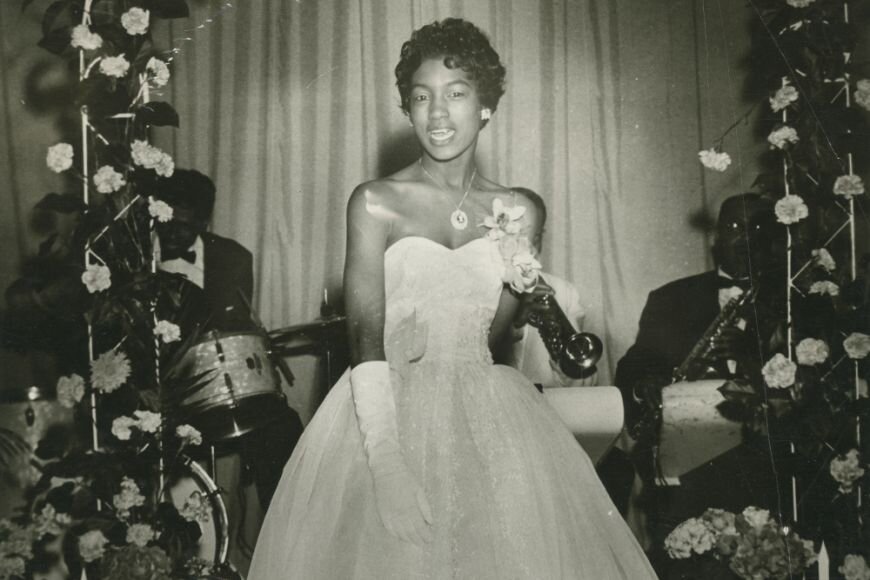
The exhibit, which leaves the museum April 11, tells the story of the Owl Club, a social club founded in 1941 by eight Black businessmen in Denver’s Five Points neighborhood. The club has been a staple in the city’s Black community for almost 85 years.
Spotlighting stories of Black excellence is especially important now, amid efforts to restrict how Black history is taught, said Acoma Gaither, associate curator of Black History at History Colorado.
After President Donald Trump left office in 2021, Republican lawmakers introduced bills in more than 40 states limiting educators’ abilities to teach Black history or discuss racism.
Two months into his second term, Trump signed an executive order which accused Smithsonian museums like the National Museum of African American History and Culture for “undermin[ing] the remarkable achievements of the United States.” The order gave Vice President JD Vance the power to review and restrict presentations and programs at Smithsonian museums.
Earlier this year, the Department of Defense temporarily removed training videos about the Tuskegee Airmen and information about Jackie Robinson’s military service from its website.
“There's so many attacks happening [on] Black history. That makes you wonder [if] there might be some power in it,” Gaither said.
The exhibit at History Colorado highlights many of the notable figures in Colorado — and American — history who were members of the Owl Club.
Among them are Omar D. Blair, a Tuskegee Airman and the first Black Denver Public Schools board president; politician Elvin R. Caldwell, the first elected Black city council member west of the Mississippi; and Condoleezza Rice, the first Black female Secretary of State and female National Security Adviser.
Many of the photographs featured in the History Colorado exhibit were captured by Denver photographer Burnis McCloud and are part of the Denver Public Library’s collection.
McCloud chronicled life in Denver’s Black community from the 1930s to the 1980s and is responsible for documenting much of that history.
Based on facts, either observed and verified firsthand by the reporter, or reported and verified from knowledgeable sources.